
Jul
PlantMe practical guide
12 Low-Maintenance Indoor Plants for Sri Lankan Homes
Low maintenance means tolerant, not care-free. The strongest choice is a plant that can handle your room’s light, the way you water and the amount of space you can consistently provide.

Quick answer: What makes an indoor plant low maintenance?
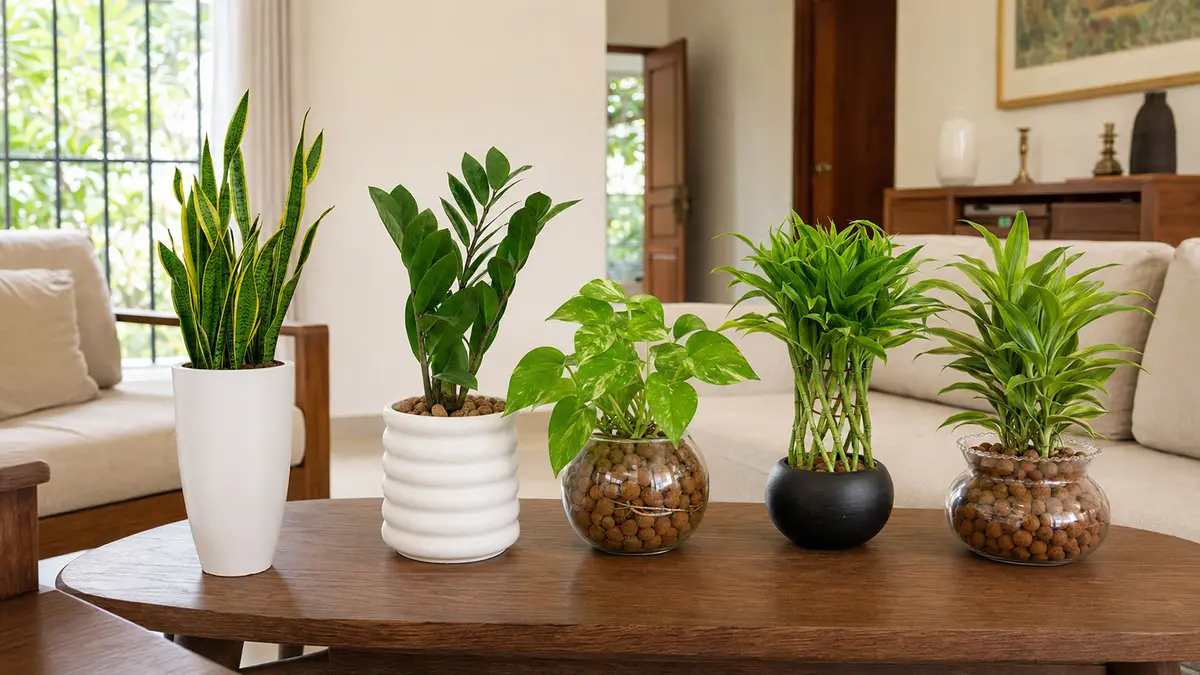
A low-maintenance plant tolerates small mistakes without demanding constant attention. Snake Plant and ZZ Plant are strong beginner options because they store water and cope with a useful range of indoor light. Pothos is adaptable, while Lucky Bamboo and compact LECA products suit desks when their water system is understood.
No plant thrives in darkness, standing water or a pot that never drains. The easiest plant is the one matched to your conditions, not the one advertised as impossible to kill.
Compare before choosing
Low-maintenance indoor plants at a glance
Compare the plant’s tolerance with the position you actually have. Lower light slows growth and usually slows water use, so care must change with placement.
| Plant | Suitable light | Watering approach | Typical scale | Best use |
|---|---|---|---|---|
| Snake Plant | Low to bright indirect | Dry well before watering | Compact to tall | Bedrooms and floor corners |
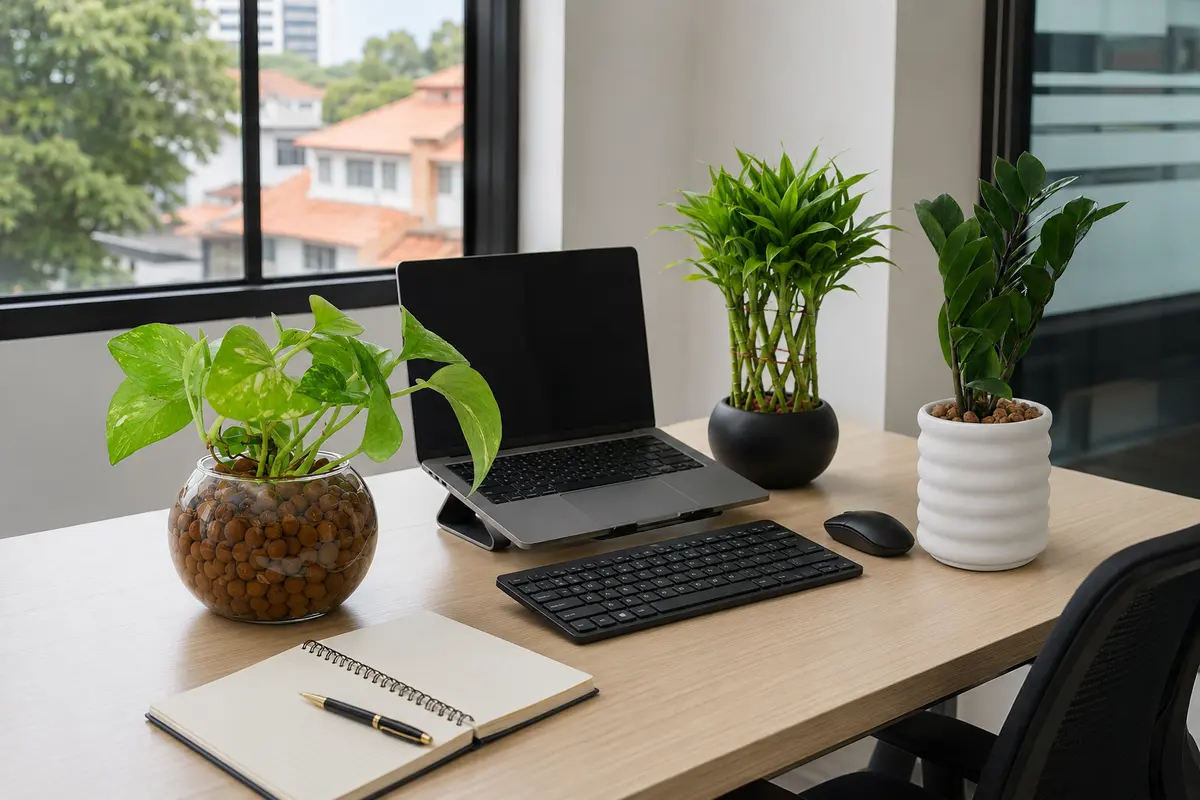
| ZZ Plant | Low to bright indirect | Water after substantial drying | Compact to medium | Desks and office corners |
| Pothos | Medium to bright indirect | Partial drying; system-specific | Trailing or climbing | Shelves and counters |
| Lucky Bamboo | Filtered to medium indirect | Match soil, water or LECA setup | Compact to medium | Desks and gifts |
| Aglaonema | Medium indirect | Allow the upper layer to dry | Compact to medium | Bedrooms and offices |
| Philodendron | Medium to bright indirect | Partial drying | Varies by type | Shelves or floor positions |
| Cactus | Very bright; often some direct sun | Dry thoroughly | Compact | Bright windows |
| Sandriana | Medium to bright indirect | Match the growing system | Compact | Desks and gifts |
| Monstera | Bright indirect | Water as the upper medium dries | Medium to large | Living rooms |
| Areca Palm | Bright indirect | Even moisture with drainage | Tall and spreading | Living rooms and receptions |
| Peace Lily | Medium to bright filtered | Lightly moist, never waterlogged | Medium | Living rooms and receptions |
| Chain of Hearts | Bright indirect with gentle sun | Dry much of the medium | Compact and trailing | High shelves |
The shortlist explained
12 easy-care choices worth considering
The following plants cover compact desks, shelves, apartment corners and larger reception spaces. The descriptions focus on the mistake each plant is most likely to forgive and the one it will not.
Snake Plant
Dracaena trifasciata
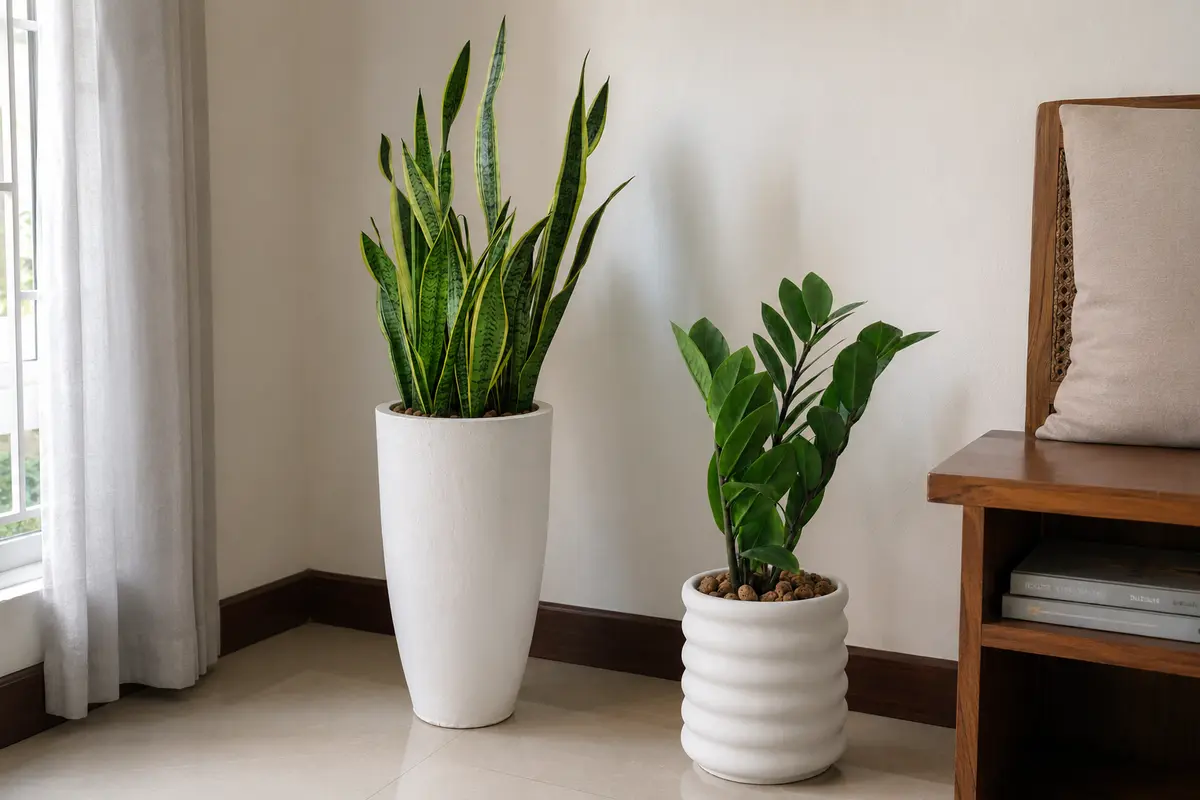
Upright leaves use little floor width, and the plant tolerates a wider light range than many decorative species. Its weakness is wet growing medium left around the roots. See PlantMe’s Snake Plant options for the current plant-and-pot combination.
ZZ Plant
Zamioculcas zamiifolia
Fleshy rhizomes store water, so a missed watering is usually safer than adding water by habit. Bright indirect light supports stronger growth even though the plant tolerates softer light. See PlantMe’s ZZ Plant options for the current plant-and-pot combination.
Pothos
Epipremnum aureum
Pothos adapts readily and can be pruned to control its footprint. A soil-grown Pothos and one established in LECA require different watering checks. See PlantMe’s Pothos options for the current plant-and-pot combination.
Lucky Bamboo
Dracaena sanderiana
Lucky Bamboo provides a strong sculptural shape in a compact space. Keep it away from harsh direct sun and maintain the particular container system rather than following a generic schedule. See PlantMe’s Lucky Bamboo options for the current plant-and-pot combination.
Aglaonema
Aglaonema species
Aglaonema is valued for patterned foliage and reasonable tolerance of indoor conditions. Good drainage and stable placement matter more than constant attention. See PlantMe’s Aglaonema options for the current plant-and-pot combination.
Philodendron
Philodendron species
Many commonly sold Philodendrons adapt well indoors when they receive useful light and a well-drained medium. Choose the exact growth habit before deciding where it will live. See PlantMe’s Philodendron options for the current plant-and-pot combination.
Cactus
Cactaceae family
Cacti need little water but are not automatically easy in a dim interior. Their care becomes simple only when there is enough light and the container does not stay wet. See PlantMe’s Cactus options for the current plant-and-pot combination.
Sandriana
Dracaena sanderiana
Compact Sandriana arrangements tolerate normal indoor conditions when kept out of harsh sun and direct cold airflow. Glass and LECA versions make root and water checks easier to see. See PlantMe’s Sandriana options for the current plant-and-pot combination.
Monstera
Monstera deliciosa
Monstera is adaptable but needs more space, usable light and occasional support than a desk plant. It is low effort only when the room can accommodate its expanding leaves. See PlantMe’s Monstera options for the current plant-and-pot combination.
Areca Palm
Chrysalidocarpus lutescens
An Areca Palm creates volume quickly in a room, but its broad canopy needs bright indirect light and protection from dry air-conditioning vents. It is manageable, not neglect-proof. See PlantMe’s Areca Palm options for the current plant-and-pot combination.
Peace Lily
Spathiphyllum species
Peace Lily communicates water stress visibly, which helps attentive beginners, but repeated severe wilting is not a care strategy. Stable moisture and drainage are the goal.
Chain of Hearts
Ceropegia woodii
Chain of Hearts stores water in succulent leaves and tubers, but sparse growth develops when light is too weak. It suits owners who can provide a bright elevated position.
Treat this shortlist as a starting point. The exact plant, pot, maturity, root condition and room environment still determine how easily the plant adapts.
Light first, appearance second
Match the plant to the light you actually have
Marketing labels such as low light or easy care are not substitutes for checking a room. Look at the exact position during the morning, midday and afternoon. A bright room can still have a dim shelf several metres from the window.
Lower light generally means slower growth and slower drying. If a plant is moved from a bright nursery to a softer indoor position, the old watering rhythm may become excessive.
- Identify the nearest usable window and any external shade.
- Check whether direct sun reaches the leaves and for how long.
- Notice air-conditioning vents, hot glass and strong draughts.
- Measure the mature width, not only the pot.
- Choose one person to check the plant instead of several people watering it.
A routine that works
A simple watering routine for busy owners
Do not put every plant on the same weekly schedule. Check the medium, pot weight, visible roots where possible and recent room conditions. Water use changes with light, temperature, airflow, plant size and the growing medium.
The routine below is intentionally decision-based. It reduces the risk of watering because a calendar notification appeared even when the plant is still wet.
- Look at the plant for new drooping, yellowing, soft tissue or pest signs.
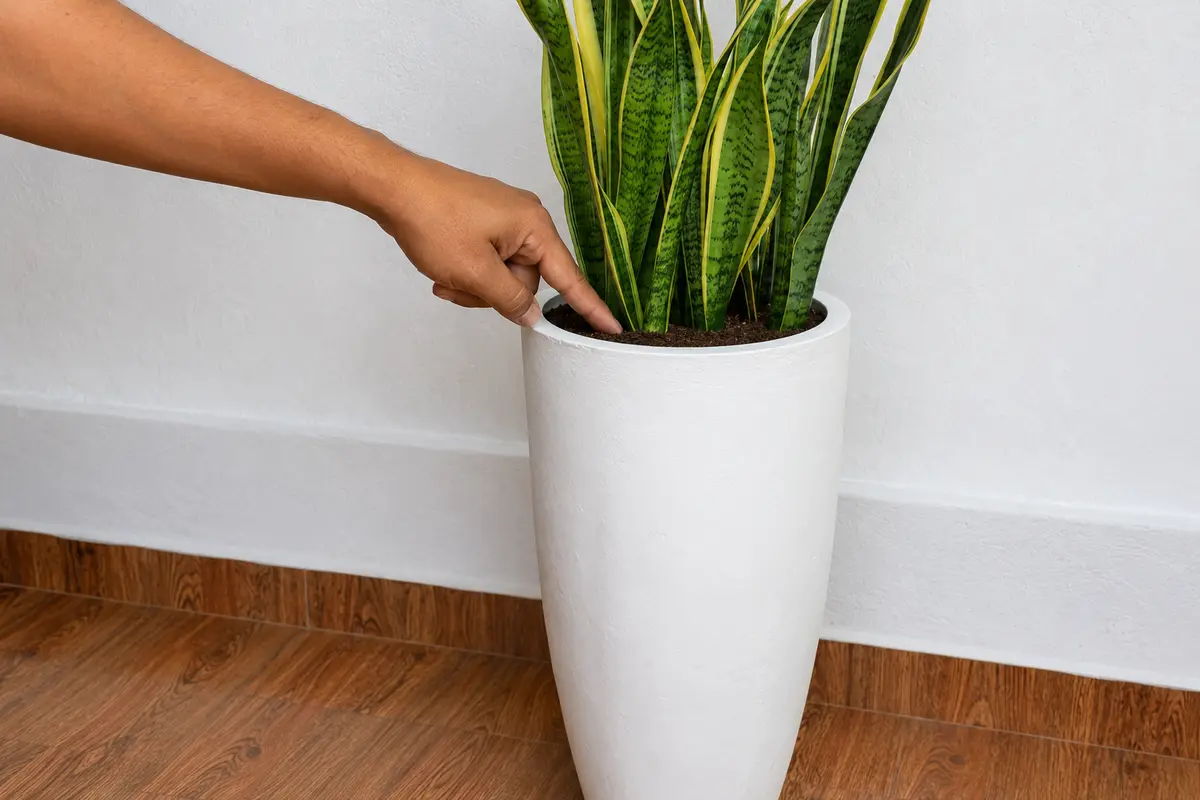
- Check moisture using the method suitable for soil, LECA or a water-grown arrangement.
- Water only when the plant and medium indicate it is needed.
- Allow excess water to drain where the system requires drainage.
- Record the check date so another person does not repeat it.
Avoid preventable problems
Five mistakes that make easy plants difficult
Most failures are not mysterious. They come from a mismatch between the plant, room and routine.
- Treating low maintenance as no maintenance. Dust, pests, root problems and changing light still need occasional checks.
- Watering every plant together. A cactus, Peace Lily and LECA Pothos should not receive one identical routine.
- Choosing for looks alone. A plant that needs bright light will not become a low-light plant because it matches the furniture.
- Ignoring the outer pot. Decorative containers can hide retained water and make a correct watering volume dangerous.
- Moving the plant repeatedly. Stable conditions make it easier to interpret growth and symptoms.
For a broader comparison, read PlantMe’s guide to the best indoor plants in Sri Lanka and the separate guide to low-light rooms.
Clear answers
Frequently asked questions
Which indoor plant needs the least attention?
Snake Plant and ZZ Plant are forgiving choices when placed in usable light and allowed to dry appropriately. Neither should be ignored indefinitely.
Which plant can tolerate missed watering?
ZZ Plant, Snake Plant and many cacti tolerate drying better than frequent wetness. The safe interval still depends on the pot, medium and light.
Does low maintenance mean low light?
No. Maintenance and light are different questions. A cactus can need little watering but still require very bright light.
Are cactus plants always easy indoors?
Only when the position is bright enough and the container drains or is watered very carefully. Dim rooms often cause stretched growth and prolonged wetness.
What is the best first plant to buy?
For many beginners, a Snake Plant, ZZ Plant or Pothos is a sensible start. Choose among them using your available light, pot preference and space.
Evidence base
Sources and further reading
Plant care varies with the specimen and environment. These references support the general light, water, growing-medium and office-placement principles used in this guide.
Find an easy-care plant that fits your space
Browse PlantMe’s current indoor plants, then compare the real pot size, growing medium and care instructions before choosing.
Product availability, plant size, pot combinations, delivery charges and care needs can change. Confirm the current listing and your room conditions before ordering.
