
Jul
PlantMe practical guide
Best Low-Light Indoor Plants for Apartments and Offices
Some indoor plants tolerate softer light, but none stay healthy indefinitely without usable light. Learn how to judge a real apartment or office before choosing the plant.

Quick answer: Which plants tolerate lower light?
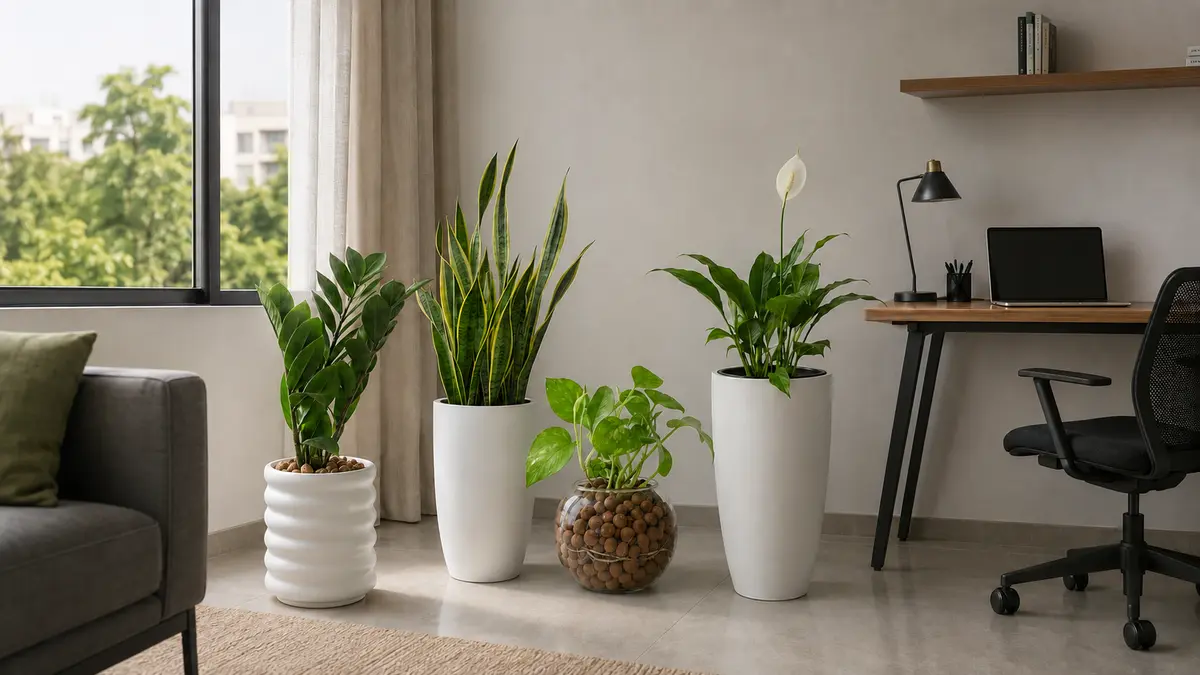
ZZ Plant, Snake Plant, Pothos, Aglaonema, Lucky Bamboo and some Philodendrons tolerate lower indoor light better than many decorative plants. Tolerate is the key word. Growth usually slows, water use falls and foliage may become less dense as light decreases.
A windowless room with lights switched off for long periods is not a sustainable plant location. Improve the light or choose a high-quality artificial plant instead of repeatedly replacing a living one.
Compare before choosing
Low-light plant comparison
Use this table to make a shortlist, then observe the room. A plant beside a shaded window receives more useful light than one deep inside the same room.
| Plant | Suitable light | Watering approach | Typical scale | Best use |
|---|---|---|---|---|
| ZZ Plant | Low to bright indirect | Dry substantially | Compact to medium | Office corners |
| Snake Plant | Low to bright indirect | Dry well | Compact to tall | Bedrooms and narrow corners |
| Pothos | Medium preferred; tolerates lower | Partial drying | Trailing | Shelves near windows |
| Aglaonema | Medium to soft indirect | Upper layer dries | Compact to medium | Bedrooms and desks |
| Lucky Bamboo | Filtered to medium indirect | System-specific | Compact | Counters and desks |
| Peace Lily | Medium filtered; tolerates softer | Even moisture, not soggy | Medium | Living rooms |
| Philodendron | Medium indirect | Partial drying | Varies | Shelves and floor spots |
| Sandriana | Medium to bright indirect | System-specific | Compact | Tabletops |
The shortlist explained
Best low-light indoor plants
These plants are selected for adaptability, not because they photosynthesise without light. Better light within each plant’s safe range usually produces stronger growth.
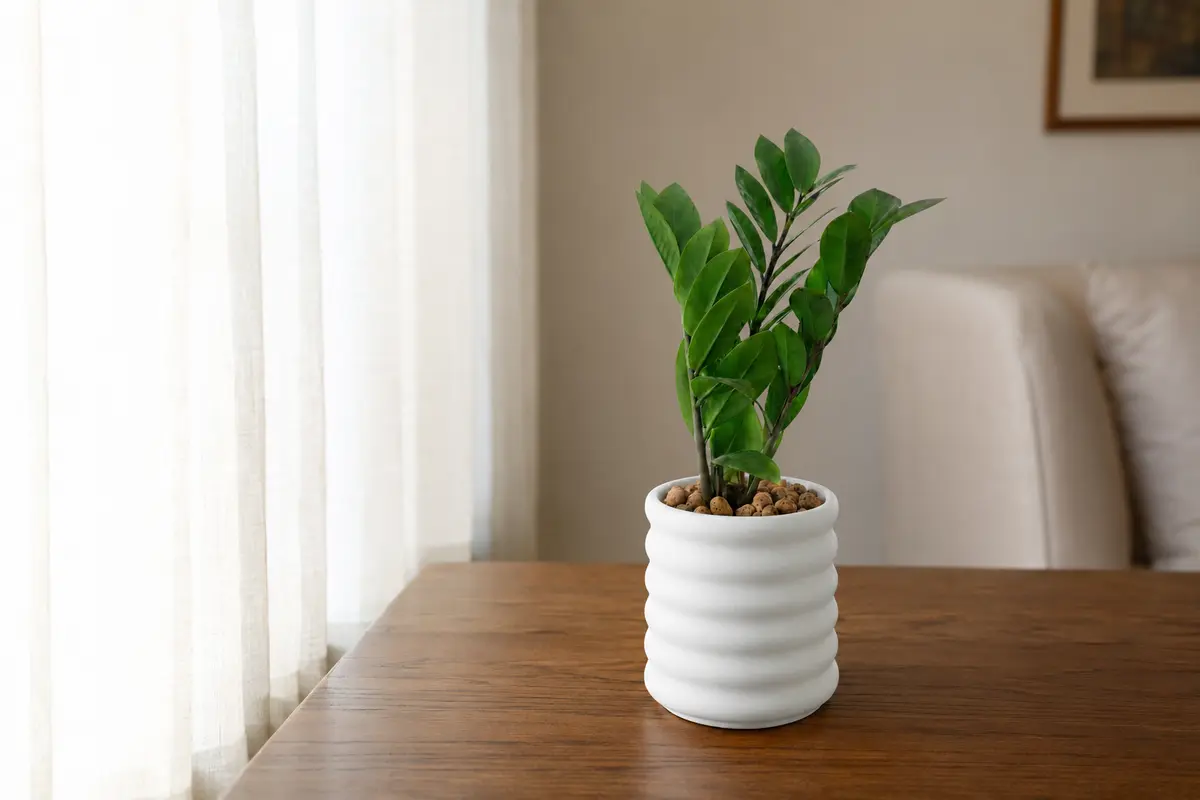
ZZ Plant
Zamioculcas zamiifolia
ZZ Plant stores water in thick rhizomes and remains presentable in softer light. New growth may be slow, so avoid compensating with extra water. See PlantMe’s ZZ Plant options for the current plant-and-pot combination.
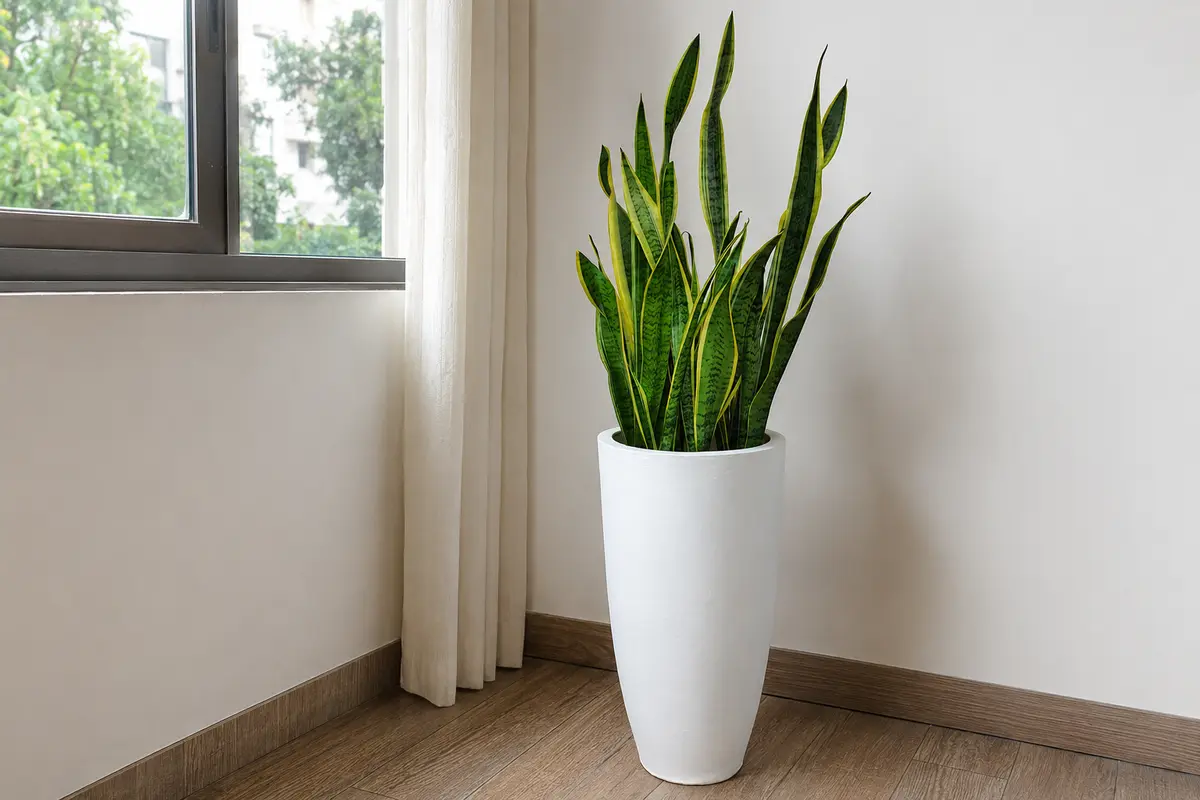
Snake Plant
Dracaena trifasciata
Its upright leaves suit narrow positions and tolerate a broad light range. In dimmer placement, wet soil takes longer to dry and root problems become more likely. See PlantMe’s Snake Plant options for the current plant-and-pot combination.
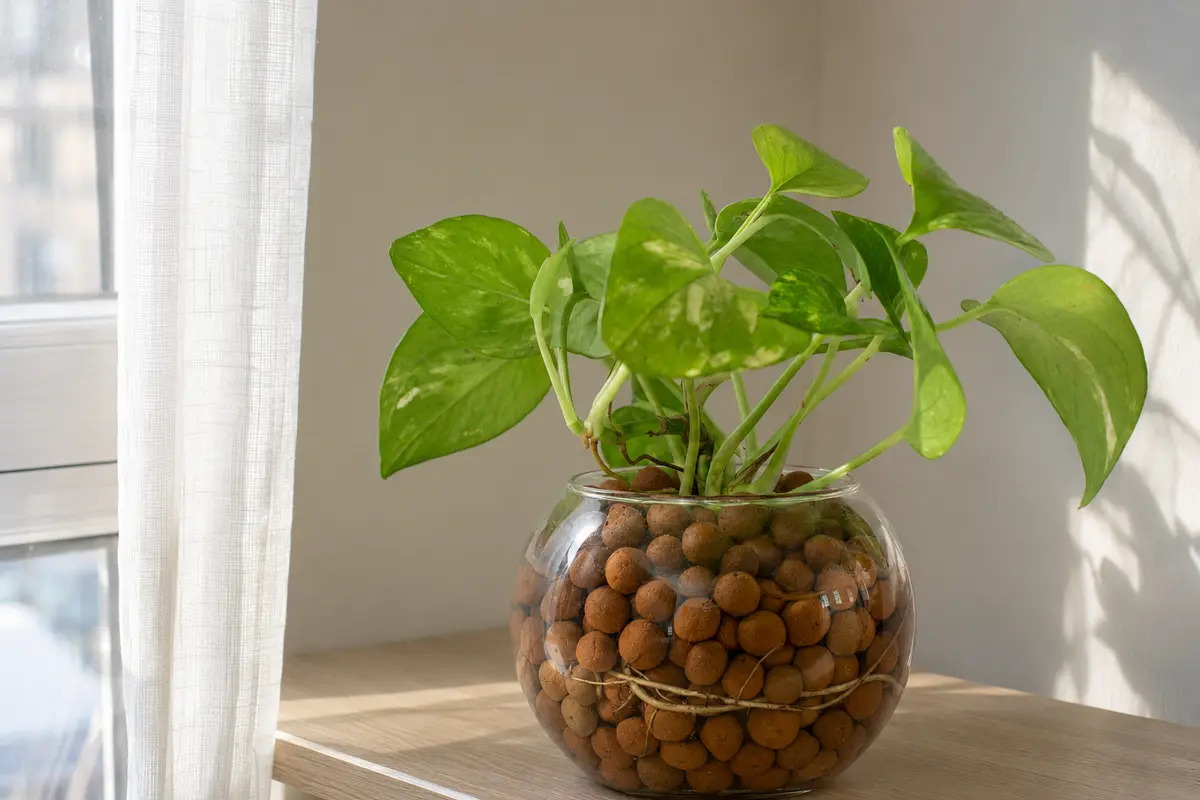
Pothos
Epipremnum aureum
Pothos can remain healthy in softer light, but vines may stretch and variegation can reduce. Keep it close enough to a window for clear daytime illumination. See PlantMe’s Pothos options for the current plant-and-pot combination.
Aglaonema
Aglaonema species
Aglaonema is a practical foliage choice for protected indoor settings. Patterned cultivars may need more light than darker green forms. See PlantMe’s Aglaonema options for the current plant-and-pot combination.
Lucky Bamboo
Dracaena sanderiana
Lucky Bamboo suits compact positions but should not be hidden in a dark interior. Harsh direct sun can damage leaves, while weak light can reduce vigour. See PlantMe’s Lucky Bamboo options for the current plant-and-pot combination.
Peace Lily
Spathiphyllum species
Peace Lily tolerates shade but usually flowers and grows better with brighter filtered light. It needs more consistent moisture judgment than Snake Plant or ZZ Plant.
Philodendron
Philodendron species
Many green-leaved Philodendrons adapt to indoor light, although a stretched stem and small leaves signal that the position is too weak. See PlantMe’s Philodendron options for the current plant-and-pot combination.
Sandriana
Dracaena sanderiana
Sandriana is compact and adaptable, especially in a bright room without direct sun. The glass-pot form helps owners see the LECA and water condition. See PlantMe’s Sandriana options for the current plant-and-pot combination.
Treat this shortlist as a starting point. The exact plant, pot, maturity, root condition and room environment still determine how easily the plant adapts.
Light first, appearance second
Low light does not mean no light
Stand in the proposed position during daylight. Can you clearly read normal print without switching on a lamp? Is the nearest window visible, or is the plant hidden behind a wall? This is only a rough screening method, but it exposes obviously unsuitable locations.
Window direction, roof overhangs, neighbouring buildings, tinted glass and curtains all change usable light. Sri Lankan sunlight can also be intense, so moving a shade-tolerant plant directly into strong sun is not the solution.
- Measure the distance to the nearest window.
- Check whether curtains stay closed during working hours.
- Observe shadow strength at several times of day.
- Watch for external obstructions and deep balconies.
- Consider a proper grow light for a genuinely dark position.
A routine that works
Watering plants in lower light
Plants use water more slowly when light is weaker and growth slows. A schedule learned in a bright shop or nursery can become too frequent after the plant moves indoors.
Check before watering. For soil-grown plants, assess the depth of drying and the pot’s weight. For LECA or water-grown products, inspect the roots, reservoir and container hygiene rather than treating them like soil.
- Confirm that the plant is receiving useful daylight.
- Check the medium below the decorative surface.
- Inspect roots through glass where the product allows it.
- Water only when the specific plant and system need it.
- Reassess after seasonal changes or a move within the room.
Avoid preventable problems
Signs the plant needs more light
Light problems develop gradually. Respond to a pattern rather than one old leaf.
- Leaning strongly toward the window. Rotate occasionally, but first move the plant closer to useful light.
- Long gaps between leaves. Stretched growth often means the plant is searching for light.
- Smaller or paler new leaves. Check light before reaching for fertiliser.
- Medium stays wet for a long time. Lower water use increases the danger of a fixed watering schedule.
- No growth for an extended period. Some plants are naturally slow, but confirm light, roots and pests.
Compare this guide with PlantMe’s low-maintenance plant guide before choosing. Low light and easy care overlap, but they are not identical.
Apply the guide
Three real low-light room scenarios
The phrase low light covers very different rooms. Use these scenarios to separate a workable position from one that needs artificial plant lighting.
Shaded apartment window
A plant one to two metres from a visible window, with soft shadows and no direct sun, may suit ZZ Plant or Snake Plant. Watch drying because the pot will use less water than it did in a bright shop.
Internal office desk
If daylight never reaches the desk and ceiling lights are off overnight and on weekends, a living plant will decline without a suitable grow light. Moving the same replacement plant into the same position is not a solution.
Bright room without direct sun
Many buyers call this low light even though it is bright indirect light. Pothos, Aglaonema, Lucky Bamboo and Peace Lily can perform better here than the low-light label suggests.
Use these scenarios as a starting point, then confirm the exact PlantMe product, current listing and conditions before acting on low-light indoor plants Sri Lanka.
Clear answers
Frequently asked questions
Can a plant survive in a windowless room?
Not indefinitely without adequate artificial grow lighting. Ordinary ceiling lights may not provide enough intensity or duration for healthy growth.
Do grow lights help indoor plants?
Yes, when the light has suitable intensity, spectrum, duration and placement. Follow the manufacturer’s safe-use instructions and give plants a dark period.
Should low-light plants be watered less often?
Often yes, because growth and drying slow, but check the actual medium rather than automatically extending a schedule.
Why is a low-light plant leaning?
It may be growing toward the strongest light source. Move it closer to appropriate light and rotate gradually.
Which low-light plant is easiest for an office?
ZZ Plant and Snake Plant are practical options when kept away from direct AC airflow and given usable light.
Evidence base
Sources and further reading
Plant care varies with the specimen and environment. These references support the general light, water, growing-medium and office-placement principles used in this guide.
Choose a plant for your actual light
Browse compact PlantMe products or share a clear daytime photo of the proposed position when requesting a recommendation.
Product availability, plant size, pot combinations, delivery charges and care needs can change. Confirm the current listing and your room conditions before ordering.
