
Dec
PlantMe practical guide
LECA Balls in Sri Lanka: A Beginner’s Guide
LECA is a porous inert clay medium, not a fertiliser and not a guarantee against root rot. Learn how roots, water, air, nutrients and the container form one working system.
Quick answer: What are LECA balls?
LECA means lightweight expanded clay aggregate. The porous fired-clay balls support roots, create air spaces and move some water by capillary action. They contain no complete nutrient supply and do not make rot impossible.
A working semi-hydroponic setup needs the right plant, clean roots, an appropriate container, a managed reservoir, oxygen and a suitable nutrient plan.
Know the system
LECA glossary for beginners
| Term | Meaning | Why it matters |
|---|---|---|
| LECA | Lightweight expanded clay aggregate | Supports roots and creates porous space. |
| Reservoir | Water held below much of the root zone | Provides moisture without submerging all roots. |
| Semi-hydroponics | Soilless growing with a controlled water and nutrient system | Requires different care from soil. |
| Water roots | Roots adapted to wetter, oxygenated conditions | Can differ from old soil roots. |
| Nutrient solution | Water containing suitable dissolved plant nutrients | Needed because LECA is inert. |
| Decorative top layer | LECA placed only over soil | Not the same as a genuine LECA-grown plant. |
Water and air together
How LECA works around plant roots
The clay balls contain pores and leave spaces between one another. Water can move across the material while air remains available above the reservoir. Roots grow through the gaps and may adapt to the more consistently moist environment.
The reservoir should not drown the entire root system or stem base. As water level falls, the upper root zone retains more air. The exact depth depends on container, root position and plant.
- LECA supports but does not anchor every large plant safely.
- Root oxygen still matters.
- Water level must relate to the roots.
- Clear glass improves inspection but encourages visible algae.
- Evaporation changes with room light and temperature.
Remove dust and residue
How to prepare and clean LECA
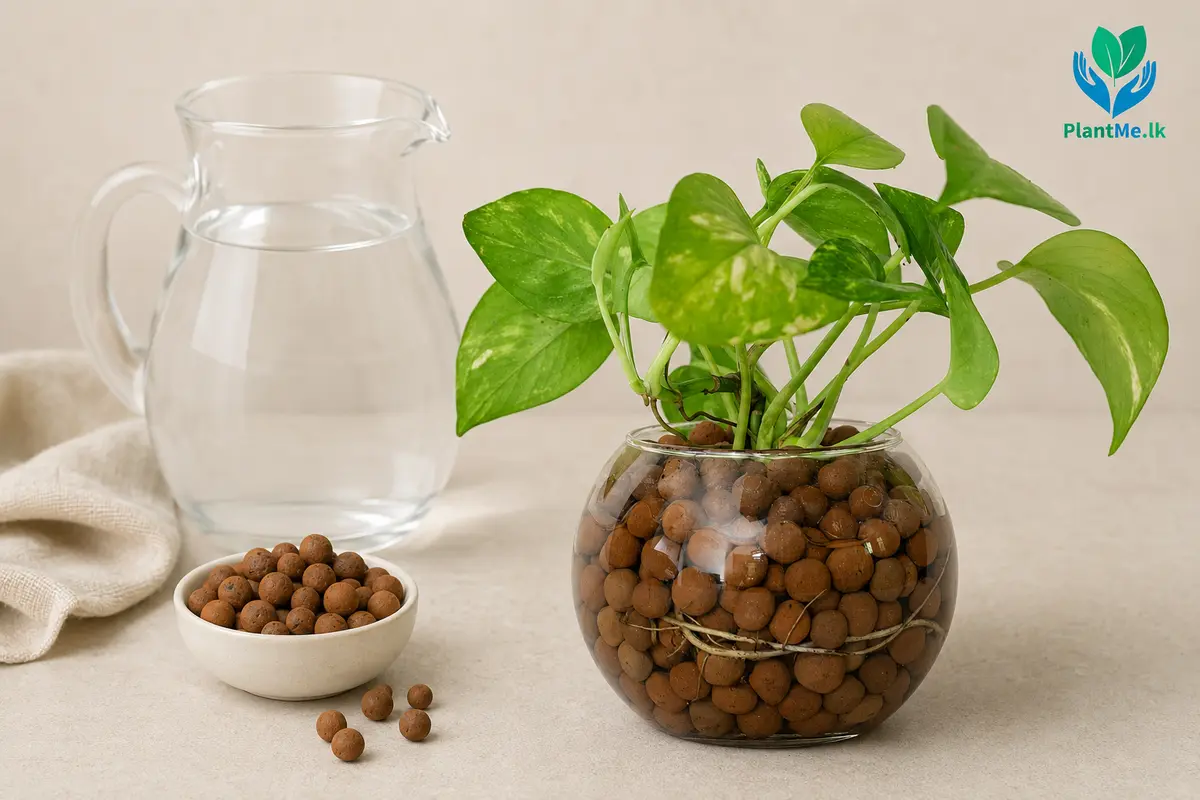
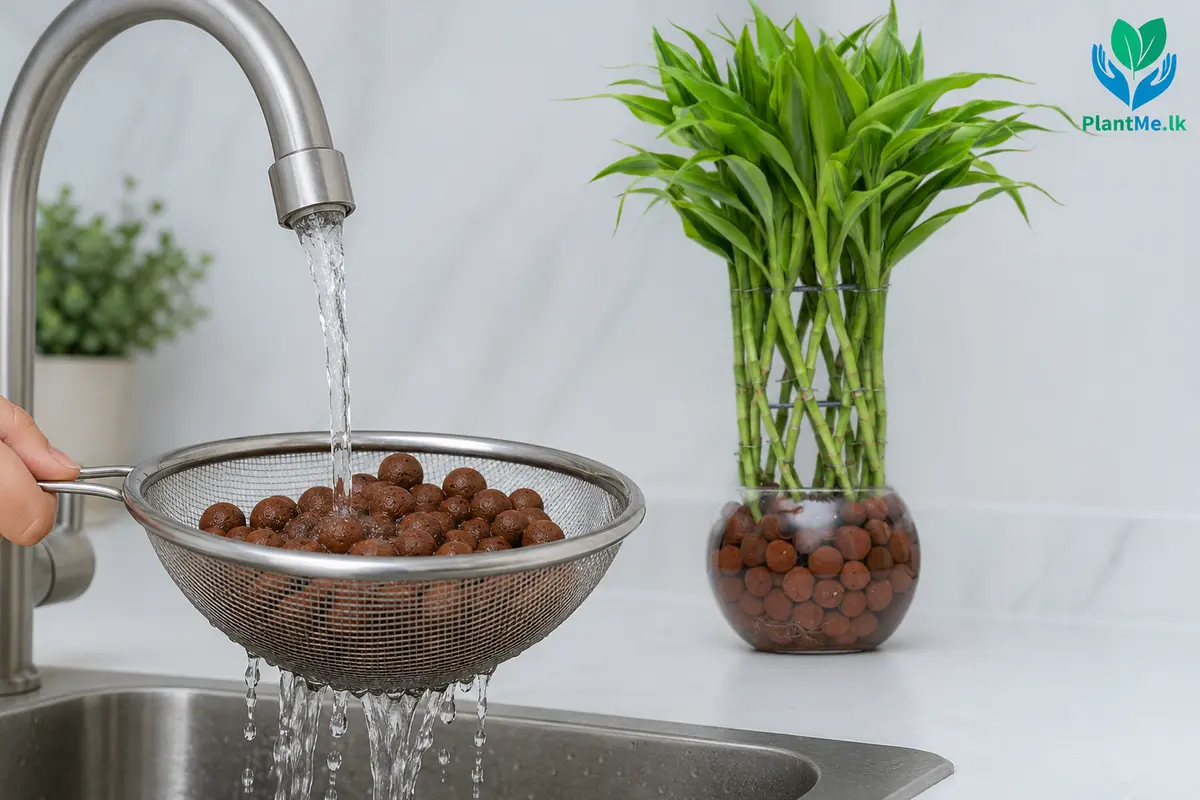
New LECA often carries clay dust. Rinse repeatedly in clean water until heavy loose residue is removed. Soaking can help saturate pores before setup, depending on the system.
- Sort out broken debris and foreign material.
- Rinse LECA in several changes of clean water.
- Soak when the setup method requires it.
- Clean and inspect the container.
- Prepare the plant and root position before filling.
The risky step
How to move a plant from soil to LECA
Choose a healthy manageable plant. Remove the soil gently, wash roots without stripping healthy tissue and trim only clearly dead material. Residual organic mix can decay in the reservoir.
Expect transition stress. Some soil roots may fail while water-adapted roots develop. Stable light and temperature matter more than heavy feeding during this stage.
- Water the soil-grown plant beforehand if that helps safe removal.
- Loosen and wash soil from roots patiently.
- Remove damaged roots with sterile tools.
- Set the crown at the correct height among prepared LECA.
- Add a conservative reservoir and monitor roots.
Maintain the system
Water level, feeding, cleaning and reuse
Top up or refresh water based on the reservoir, root condition and water clarity. Periodic flushing helps remove dissolved salts and debris. The useful interval depends on fertiliser, water quality, plant growth and container.
Use a nutrient product suitable for soilless or hydroponic culture at a conservative strength. Ordinary soil fertiliser may not provide the right balance in water, and excess salts can damage roots.
Water level
Keep a reservoir below much of the root system, adapted to the exact product.
Feeding
Provide suitable dilute nutrients during healthy growth; LECA itself is inert.
Cleaning
Flush mineral build-up and remove algae or dead roots before they obscure problems.
Reuse
Remove all roots and debris, clean and sanitise appropriately, then rinse before reuse.
Diagnose the system
Common LECA problems
| Problem | Likely causes | Action |
|---|---|---|
| Algae | Light reaches moist nutrient-containing glass | Clean the container and reduce direct light on the reservoir. |
| Cloudy water | Clay dust, debris or decaying roots | Flush, inspect roots and clean the system. |
| Root rot | Low oxygen, full submersion or damaged roots | Remove rot and reset reservoir and root position. |
| White crust | Mineral or fertiliser salts | Flush thoroughly and review water and nutrient strength. |
| Transfer decline | Loss of soil roots and delayed water-root growth | Keep stable conditions and remove only failed tissue. |
| No growth | Weak light, nutrient issue or transition stress | Check light, roots, reservoir and feeding in that order. |
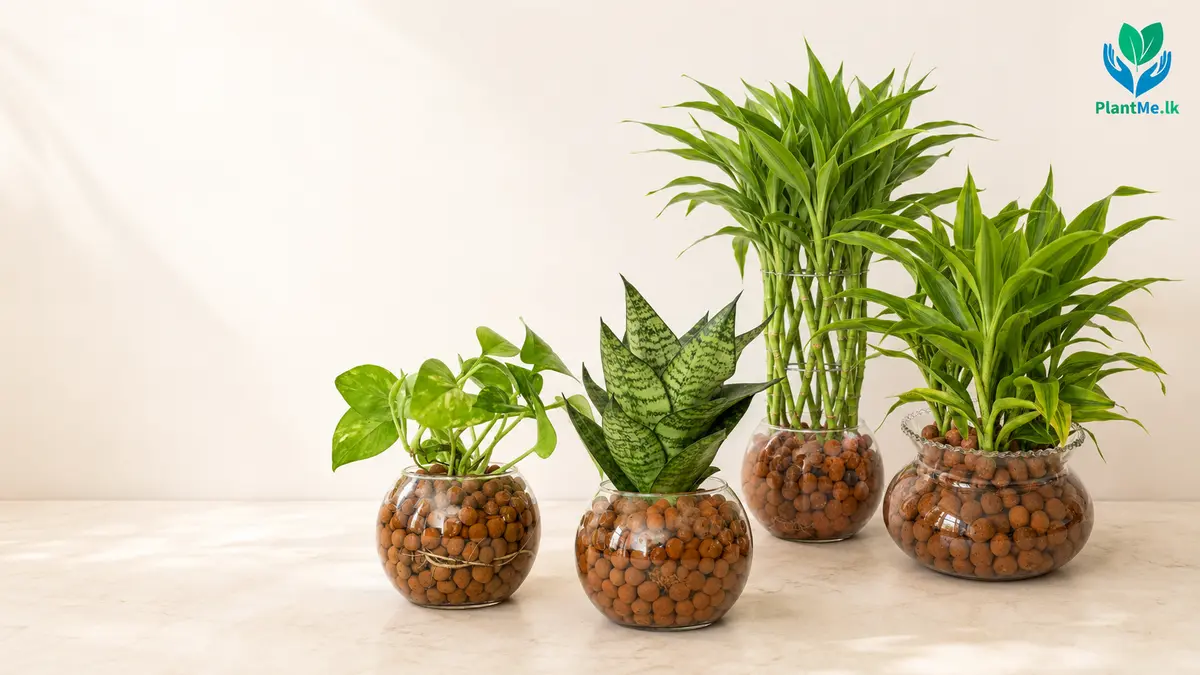
Compare the exact Pothos, Sansevieria, Sandriana and Lucky Bamboo formats before attempting a new plant-pot combination.
Apply the guide
Three ways people encounter LECA
Not every pot with clay balls is a semi-hydroponic LECA system.
Decorative top layer
Clay balls cover soil for appearance. Roots still live in potting mix, so soil watering and drainage rules apply beneath the surface.
True LECA reservoir
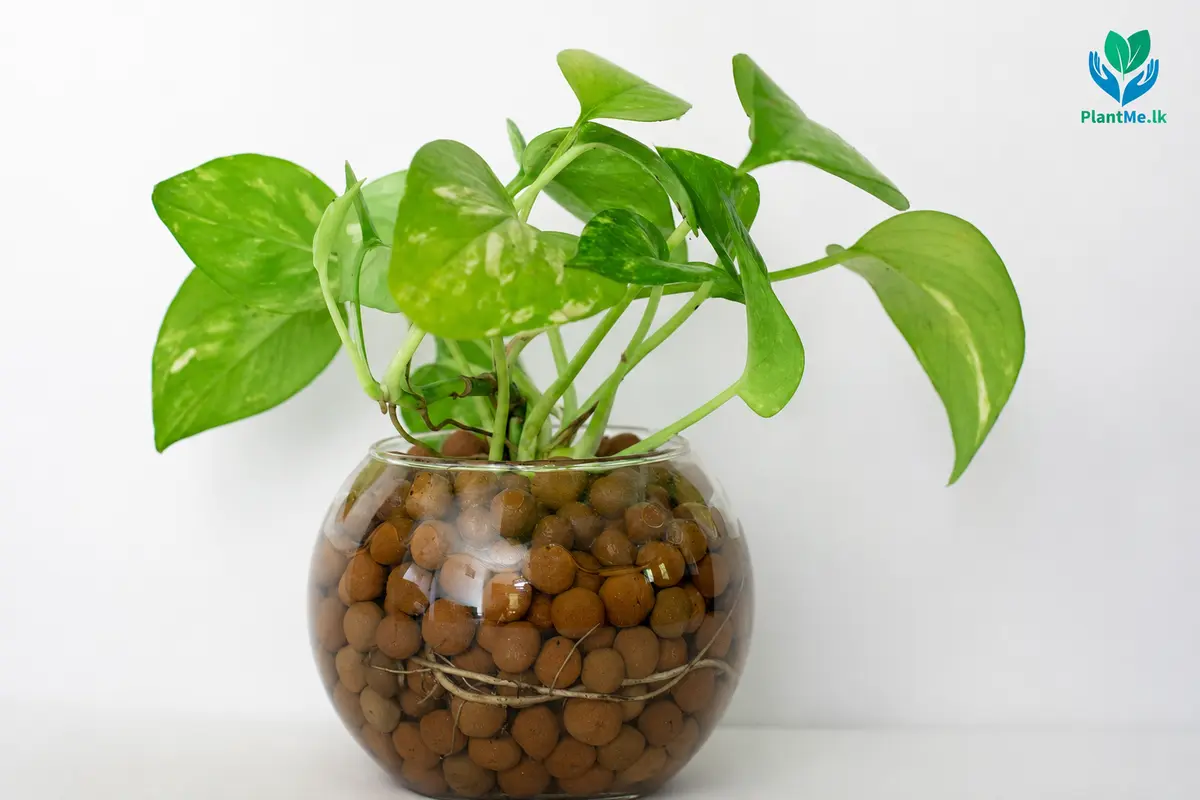
Roots occupy the clay and receive water and nutrients from a managed reservoir. Cleaning, root monitoring and solution strength become part of care.
Propagation container
A cutting may root in LECA without being ready for a permanent display. Stabilise roots and decide the long-term reservoir and nutrient plan before transfer.
Use these scenarios as a starting point, then confirm the exact PlantMe product, current listing and conditions before acting on LECA balls Sri Lanka.
Clear answers
Frequently asked questions
Is LECA the same as ordinary clay pebbles?
LECA is lightweight expanded clay aggregate made by firing clay so it becomes porous. Confirm that the product is intended for horticultural use.
Can every plant grow in LECA?
No. Species, specimen health, root type and transition method affect success.
Does LECA contain nutrients?
No complete nutrient supply. It is an inert support medium and plants may need a suitable nutrient solution.
How often should LECA be cleaned?
Inspect water clarity, algae, mineral build-up and roots. Clean when the system shows a need rather than following one universal interval.
Can LECA be reused?
Yes, after roots and debris are removed and the material is thoroughly cleaned and sanitised appropriately for the next plant.
Evidence base
Sources and further reading
The RHS explains clay pebbles as a semi-hydroponic substrate and notes both aeration value and transfer risk.
Browse plants prepared in LECA
Start with a healthy PlantMe product already established in its glass or approved container, then maintain that exact reservoir and root arrangement.
Product availability, plant size, pot combinations, delivery charges and care needs can change. Confirm the current listing and your room conditions before ordering.
