
Nov
PlantMe practical guide
Best Indoor Plants to Grow in LECA
The easiest LECA plant is often one already established in the system. Compare root behaviour, container shape, light and transition difficulty before removing a healthy plant from soil.
Quick answer: Which plants suit LECA?
Lucky Bamboo, Pothos, Sansevieria and Sandriana are practical PlantMe LECA options, especially when purchased already established in the medium. Philodendron, Aglaonema and some Monstera cuttings can adapt, but success depends on healthy roots, careful soil removal and a suitable reservoir.
Species suitability does not guarantee that every specimen will transfer successfully. Root condition, plant age and the difference between soil roots and water-adapted roots matter.
Compare before choosing
LECA plant comparison table
Container and root arrangement matter as much as species. Use this table to choose a starting product, not as a promise that all plants transfer equally.
| Plant | Suitable light | Watering approach | Typical scale | Best use |
|---|---|---|---|---|
| Lucky Bamboo | Filtered to medium indirect | Reservoir around root zone | Compact to medium | Desks and gifts |
| Pothos | Medium to bright indirect | Visible reservoir and roots | Compact trailing | Table displays |
| Sansevieria | Medium to bright indirect | Low reservoir with air space | Compact upright | Desks and counters |
| Sandriana | Medium indirect | System-specific reservoir | Compact | Gifts and offices |
| Philodendron | Bright indirect | Species and root-stage dependent | Varies | Experienced growers |
| Monstera cuttings | Bright indirect | Node and roots monitored | Starts compact | Propagation projects |
| Aglaonema | Medium to bright indirect | Careful transition | Compact to medium | Experienced growers |
The shortlist explained
Best plants for LECA
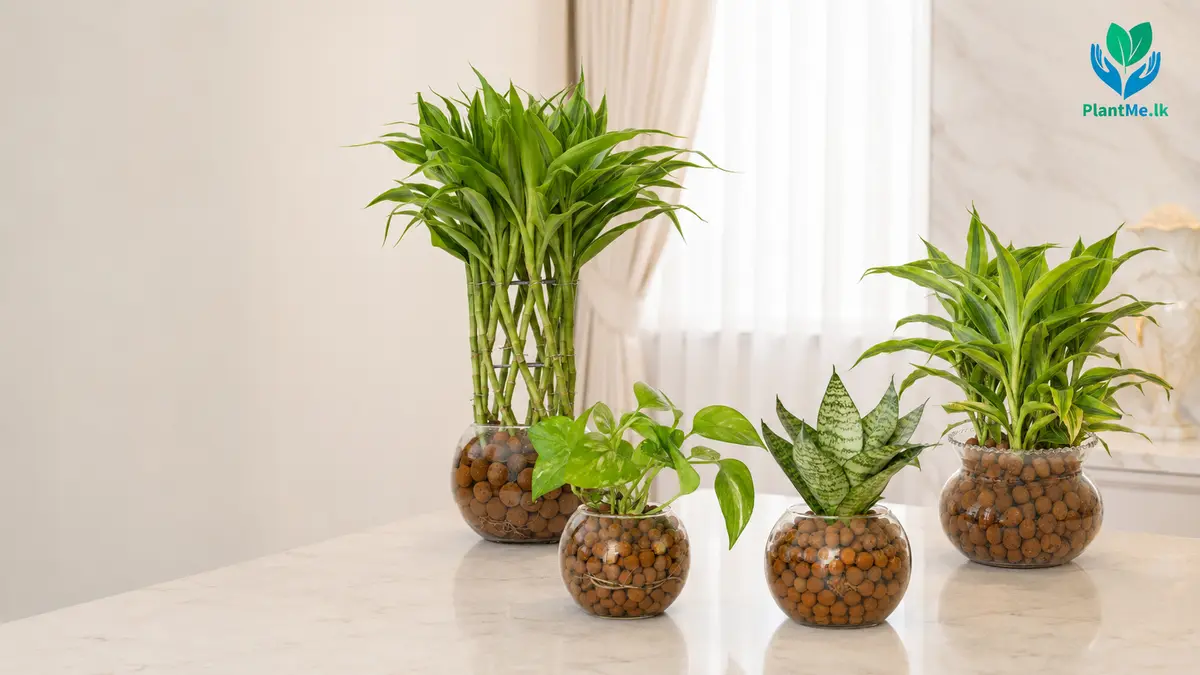
PlantMe’s verified products make the strongest beginner examples because the plant and pot pairing already exists.
Lucky Bamboo
Dracaena sanderiana
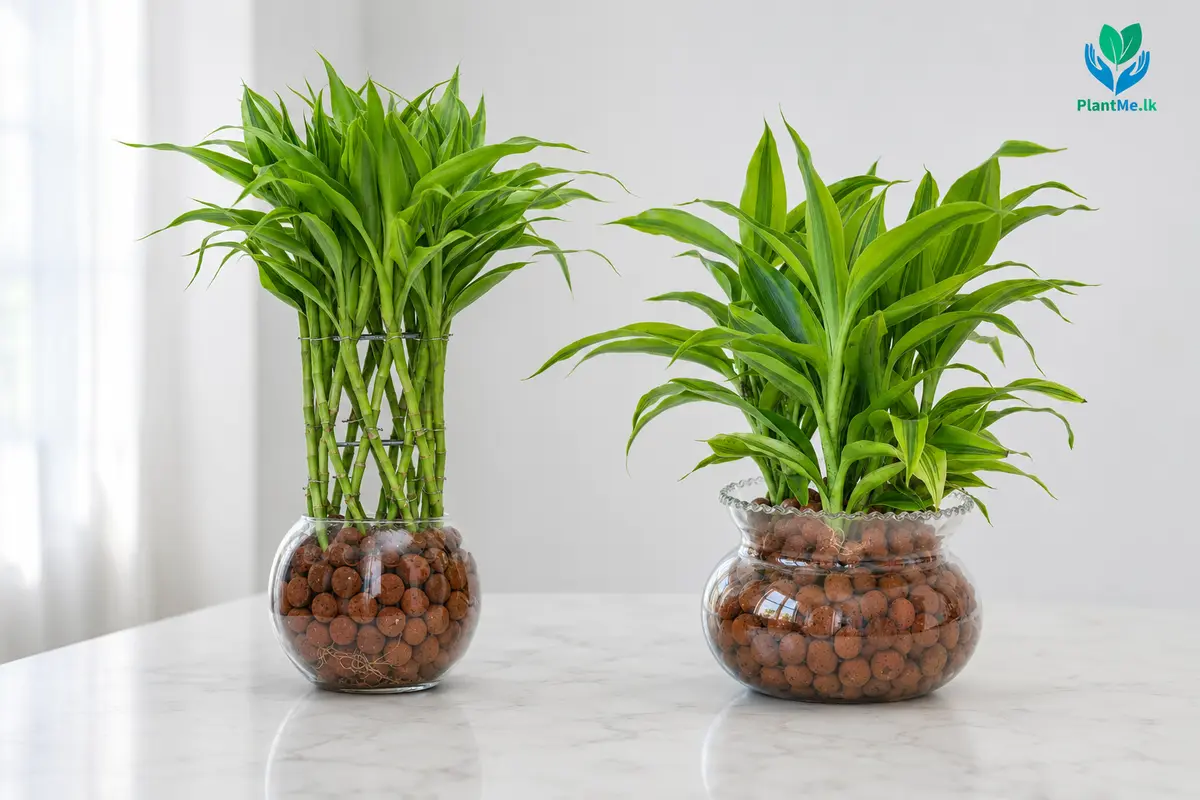
Lucky Bamboo is commonly displayed with water and LECA. Keep stems firm and manage clean water rather than submerging the whole arrangement. See PlantMe’s Lucky Bamboo options for the current plant-and-pot combination.
Pothos
Epipremnum aureum
Pothos adapts readily and produces visible water roots. Prune vines to keep the rounded glass bowl practical. See PlantMe’s Pothos options for the current plant-and-pot combination.
Sansevieria
Dracaena trifasciata
Its water-storing leaves make prolonged full saturation risky. Use the exact established PlantMe setup rather than converting a large plant casually. See PlantMe’s Sansevieria options for the current plant-and-pot combination.
Sandriana
Dracaena sanderiana
The dense foliage creates a clean soil-free display. Confirm whether the selected product is the Princess glass or another container. See PlantMe’s Sandriana options for the current plant-and-pot combination.
Philodendron
Philodendron species
Many aroids can adapt, but a mature soil plant may lose old roots during transition. Start with a cutting or an established LECA product where possible. See PlantMe’s Philodendron options for the current plant-and-pot combination.
Monstera cuttings
Monstera deliciosa
A rooted cutting is easier to monitor than converting a mature floor plant. The cutting must contain a viable node. See PlantMe’s Monstera cuttings options for the current plant-and-pot combination.
Aglaonema
Aglaonema species
Aglaonema can adapt, but clean roots and stable warm conditions are essential. Avoid treating species suitability as guaranteed success. See PlantMe’s Aglaonema options for the current plant-and-pot combination.
Treat this shortlist as a starting point. The exact plant, pot, maturity, root condition and room environment still determine how easily the plant adapts.
Light first, appearance second
What makes a plant a good LECA candidate?
Choose a healthy plant with accessible roots, manageable size and no active rot. Plants that root easily from cuttings are often simpler than large mature specimens with dense soil-bound roots.
The container must provide space for LECA, roots and an appropriate reservoir while keeping the stem or crown at the correct height.
- Healthy firm roots and stems.
- A container sized to the root system.
- A visible or measurable reservoir.
- Light suitable for the species.
- A nutrient plan for inert media.
A routine that works
Match the plant to the container
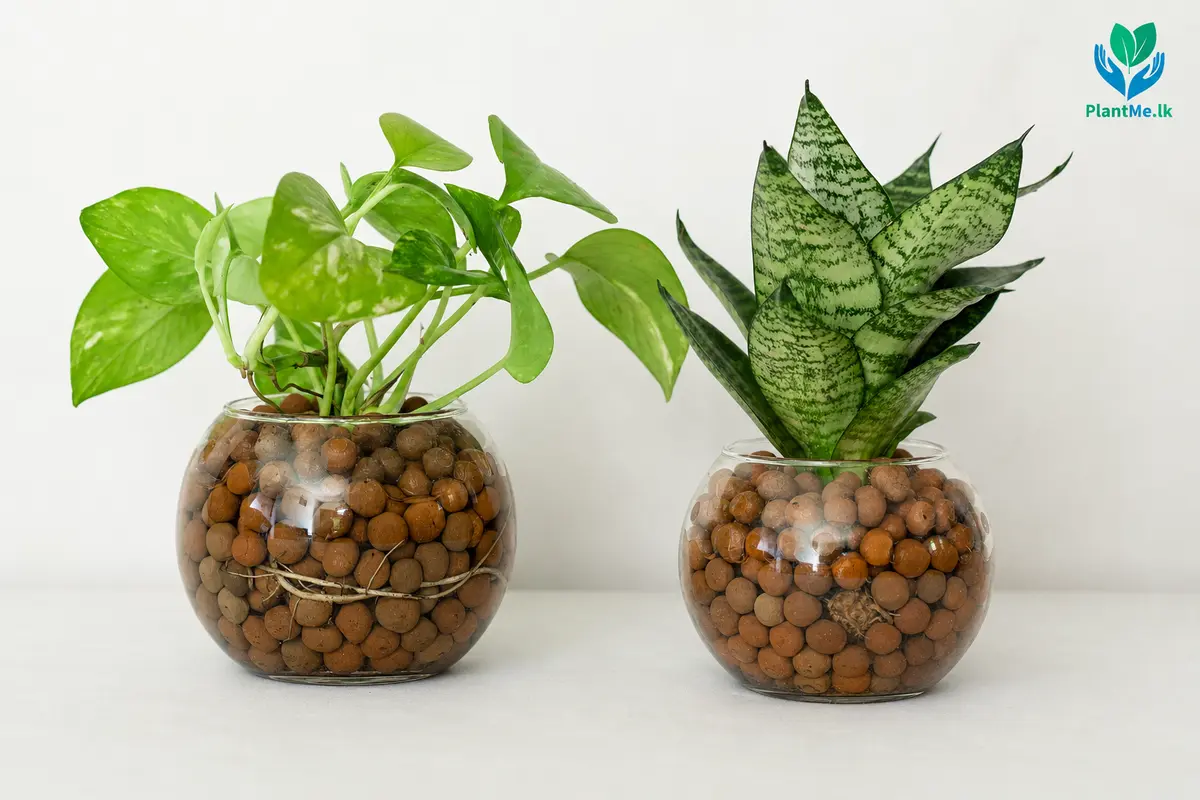
A rounded glass bowl suits a compact root system and tabletop display. It is not automatically suitable for every tall or heavy plant. Stability, root depth and water access must match.
Clear containers make algae more visible because light reaches the moist system. Cleanliness and position are part of care.
- Inspect root depth before filling LECA.
- Keep the crown or stem base at its established height.
- Add a reservoir below much of the root zone.
- Monitor new water-adapted roots.
- Clean and feed according to the actual system.
Avoid preventable problems
Plants and situations that need more caution
LECA is a growing method, not a universal upgrade.
- Large mature floor plant. Transition can sacrifice a large root system and destabilise the plant.
- Active root rot. Treat disease before placing damaged roots into a reservoir.
- Very fine fragile roots. Soil removal can cause serious damage.
- No nutrient plan. Inert LECA does not feed the plant permanently.
- Wrong container. A decorative glass bowl can be unstable or too shallow.
- Residual soil. Organic material in the reservoir can decay.
Read the LECA beginner guide and LECA vs soil comparison before attempting a transfer.
Apply the guide
Choose a LECA starting point
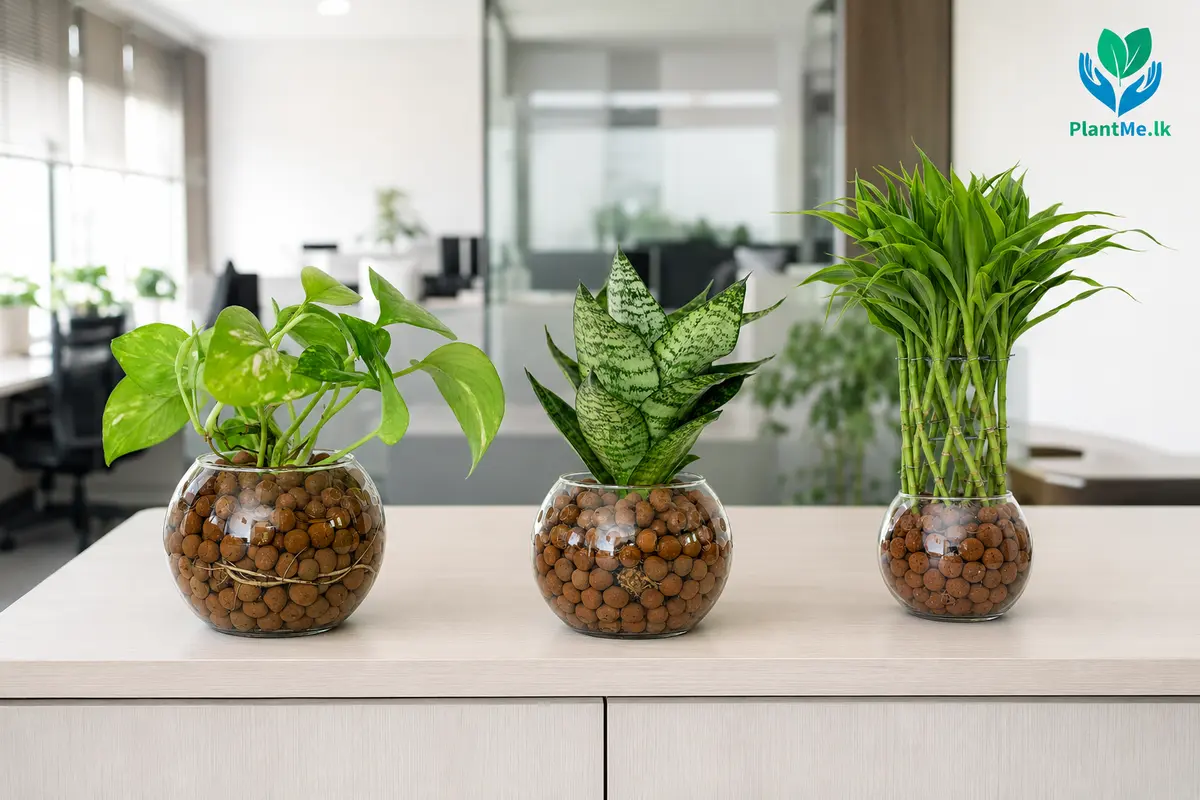
The best beginner choice depends on whether the goal is care simplicity, gifting or learning root behaviour.
Easiest observation
Pothos in a rounded glass bowl develops visible roots and responds clearly to light and pruning. Keep the vine compact and the glass clean.
Compact upright gift
Sansevieria or Sandriana creates a smaller horizontal footprint. Confirm the approved PlantMe pot pairing and give the recipient product-specific reservoir instructions.
Sculptural display
Lucky Bamboo creates more height and symbolism in a desk-friendly area. Maintain clean water around the root zone and keep woven stems out of prolonged submersion.
Use these scenarios as a starting point, then confirm the exact PlantMe product, current listing and conditions before acting on best plants for LECA Sri Lanka.
Clear answers
Frequently asked questions
Which LECA plant is easiest for a beginner?
A healthy Pothos, Lucky Bamboo, Sansevieria or Sandriana product already established in LECA is easier than a fresh transfer.
Can a Snake Plant grow in LECA?
Yes, in a correctly managed system with air space and controlled reservoir depth. Avoid constant full saturation.
Can a large plant be moved to LECA?
Possible does not mean sensible. Large conversions are disruptive, heavy and difficult to stabilise.
Is a glass bowl suitable for every plant?
No. Root depth, plant weight, oxygen, reservoir and stability must fit the plant.
What happens if soil remains on the roots?
Residual organic material can cloud water, reduce oxygen and encourage decay during transition.
Evidence base
Sources and further reading
Plant care varies with the specimen and environment. These references support the general light, water, growing-medium and office-placement principles used in this guide.
Browse PlantMe’s LECA plant collection
Choose a verified product already prepared in LECA and follow the instructions for its exact glass or approved pot.
Product availability, plant size, pot combinations, delivery charges and care needs can change. Confirm the current listing and your room conditions before ordering.
