
Nov
PlantMe practical guide
LECA vs Soil: Which Is Better for Indoor Plants?
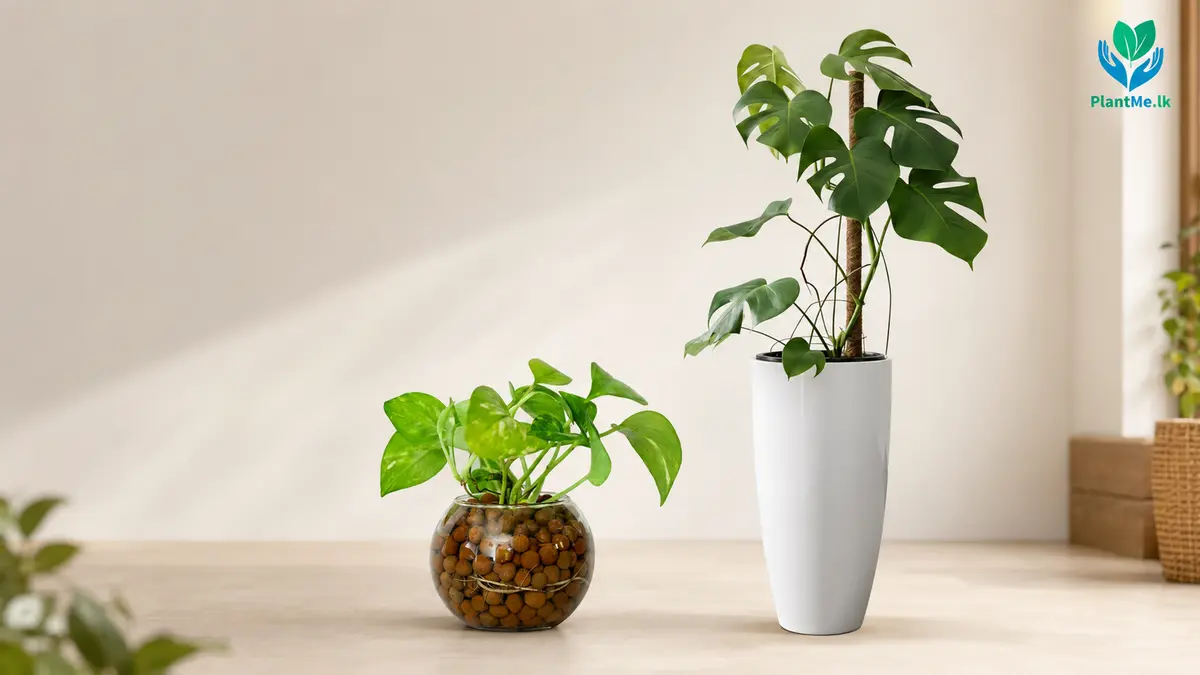
There is no universal winner. LECA improves root visibility and creates a clean soilless display, while potting mix supports a wider range of established plant routines. Both can rot roots when mismanaged.
Quick answer: Is LECA better than soil?
No medium is better for every plant or owner. LECA offers visible roots, reusable inert material and controlled reservoirs. Soil-based potting mixes support diverse plants and familiar nutrient buffering. Either system fails when light, water, oxygen and roots are mismanaged.
Choose the system the plant is already healthy in unless a real benefit justifies transition risk.
Honest trade-offs
LECA and soil comparison table
| Factor | LECA | Potting mix |
|---|---|---|
| Setup | Requires rinsing, container and reservoir design | Requires suitable mix, pot and drainage |
| Watering | Reservoir and root inspection | Moisture depth and pot-weight checks |
| Nutrients | Must be supplied in solution | Mix may buffer or contain nutrients |
| Root visibility | High in clear containers | Usually low without unpotting |
| Cleaning | Water, algae and salts need flushing | Spills, decomposing mix and saucers need care |
| Pests | No soil, but not pest-free | Can support fungus gnats when kept wet |
| Plant range | Good for selected adaptable plants | Broad range with species-specific mixes |
| Transition | Can be stressful from soil | No transition if already established |
| Cost | LECA and nutrient setup upfront | Mix replacement and potting supplies |
| Reuse | LECA can be cleaned and reused | Used mix is generally replaced or responsibly repurposed |
Two different checks
How watering differs
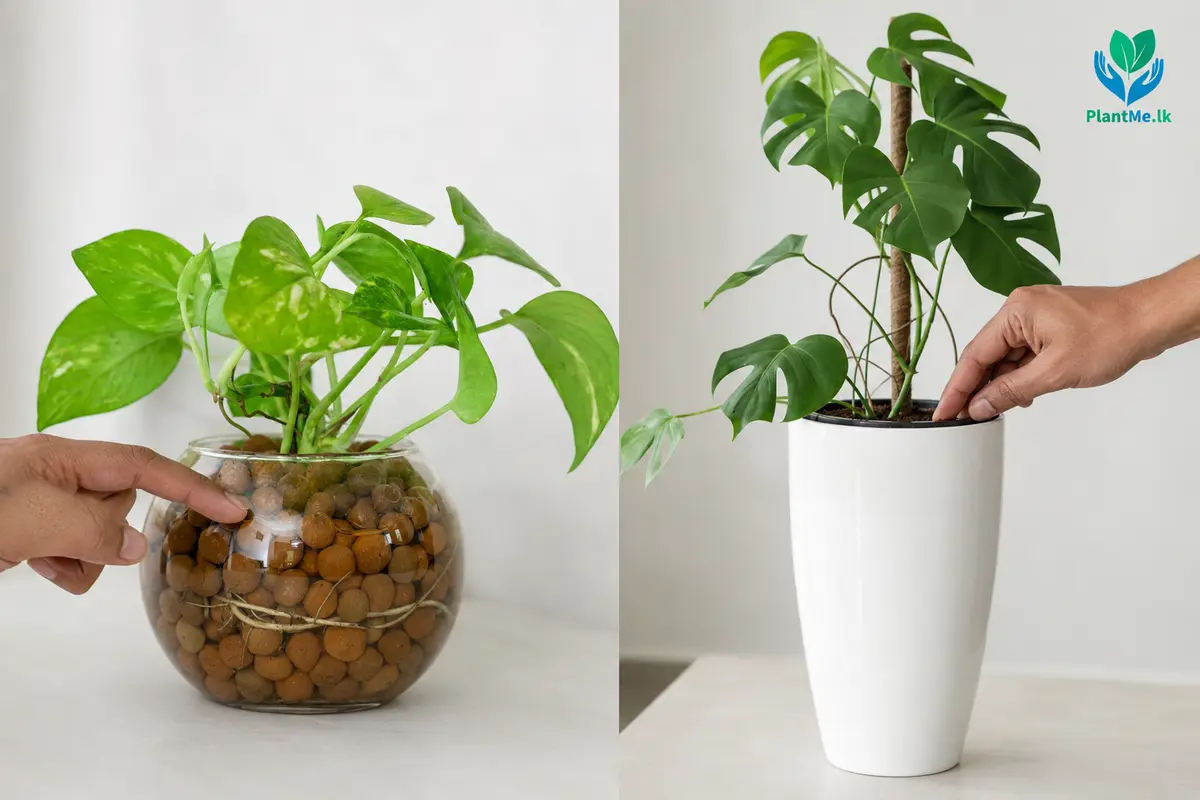
In soil, moisture is distributed through organic and mineral particles. Test below the surface, water the root zone and let excess drain. The surface can look dry while the bottom remains saturated.
In LECA, the reservoir supplies moisture below much of the root system. Check the water level, root condition, clarity and salts. Do not fill the entire container whenever the level falls.
- Soil: check depth, pot weight and drainage.
- LECA: check reservoir, roots and water quality.
- Both: reduce water use when light and growth fall.
- Both: keep stems and crowns from prolonged saturation.
Inert versus buffered media
Nutrients and feeding
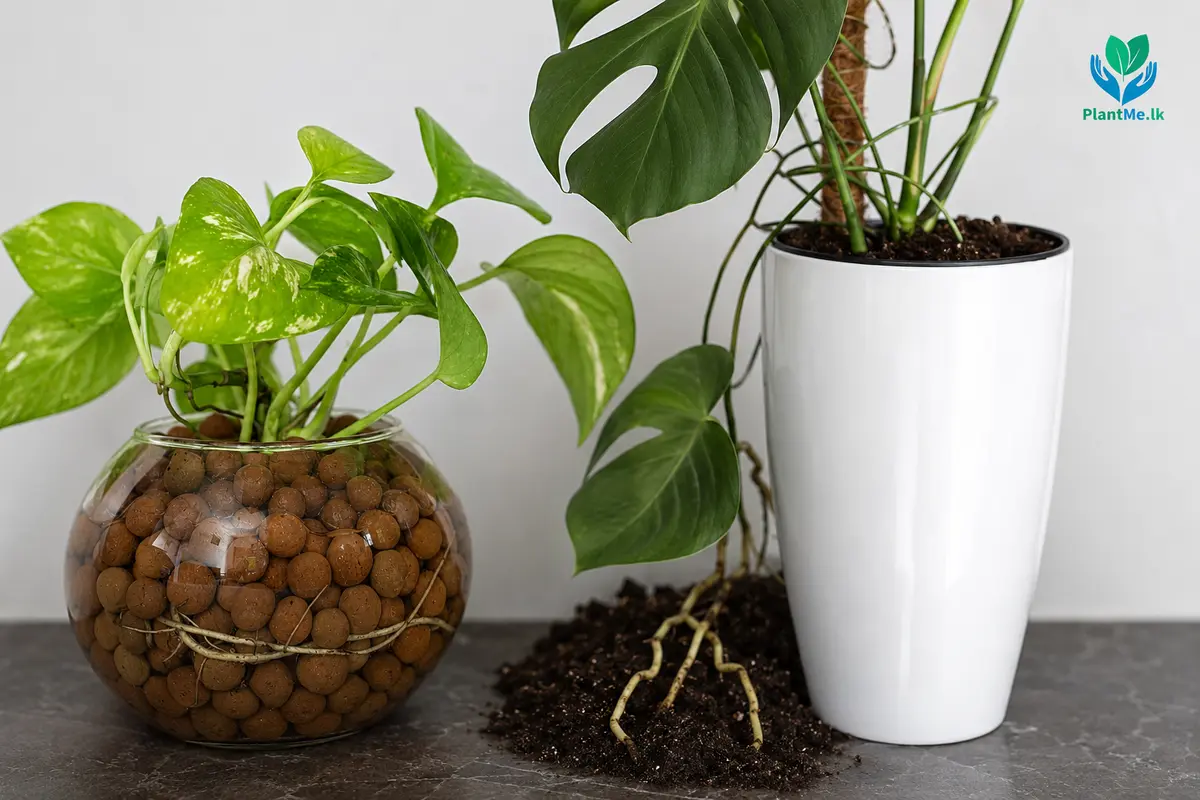
LECA contains no complete nutrient supply. A suitable dilute hydroponic or semi-hydroponic nutrient must provide essential elements in water.
Potting mix may contain compost or added fertiliser and can buffer some nutrients. That does not mean more fertiliser is always better. Salt build-up damages both systems.
What you can see
Root visibility, cleaning and pests
Clear LECA containers let owners see roots and water, which can expose trouble earlier. They also expose algae and mineral film. Soil hides most roots but protects them from light and supports a broader microbial system.
LECA removes potting soil from the display, not every pest. Scale, mealybugs and mites live on foliage and stems. Soil-grown plants can develop fungus gnats when mix stays wet.
LECA cleaning
Flush salts, remove algae and dead roots, and clean the container.
Soil cleaning
Remove fallen leaves, empty saucers and replace failed mix when necessary.
LECA pests
Inspect foliage and roots; soilless does not mean pest-free.
Soil pests
Correct excess moisture before relying on traps or treatment.
Choose by behaviour
Which medium suits different owners?
Beginners
An already-established plant in either system is easier than a fresh transfer. Choose the method you can inspect correctly.
Frequent travellers
Do not assume LECA is automatic. Reservoir size, light and plant use still determine absence tolerance.
Offices
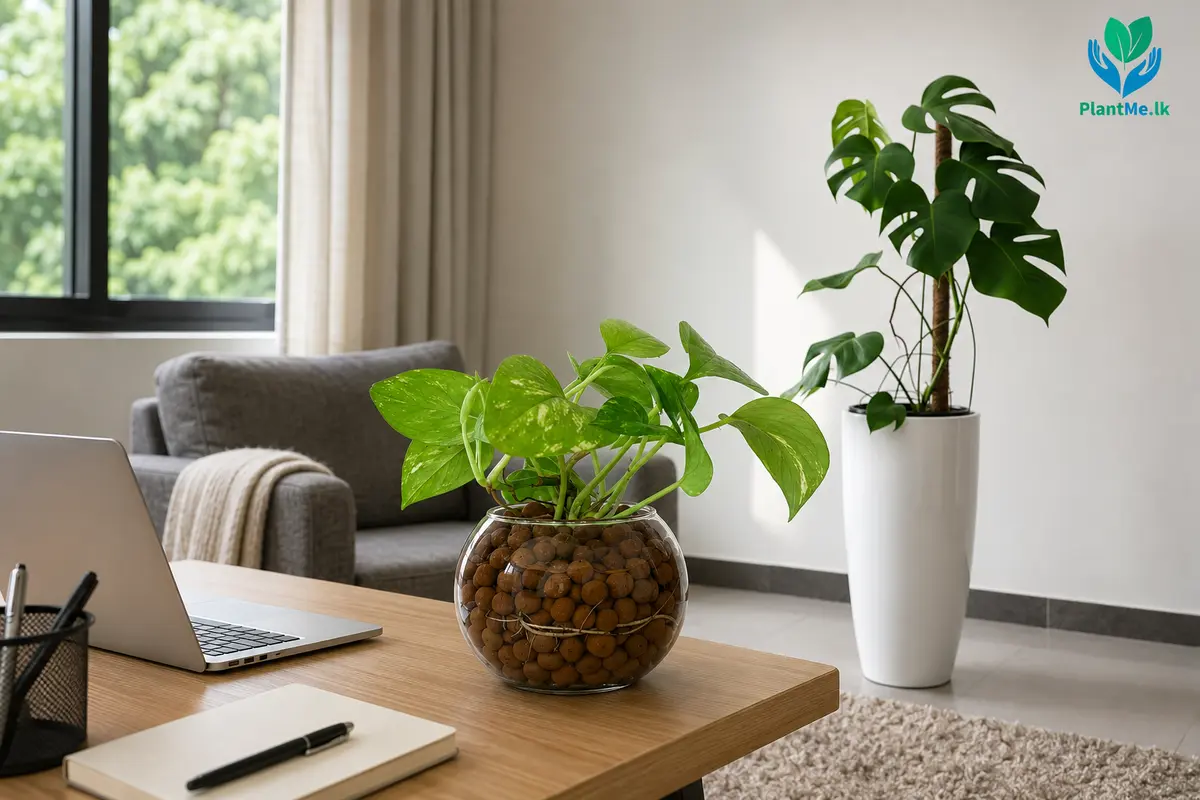
LECA offers a tidy display and visible checks, while soil works well with a trained caretaker and drainage.
Large plant owners
Soil is often more stable and familiar for mature heavy specimens. Converting a large plant is risky.
Visible-root enthusiasts
Clear LECA containers make root growth observable, with added algae and cleaning duties.
Minimal-change owners
Keep a healthy plant in its existing medium unless a specific problem or goal justifies change.
Browse PlantMe’s LECA collection and soil-grown indoor plants side by side.
Transition is not automatic
How to switch without damaging the plant
Move only a healthy manageable plant. Wash soil carefully, preserve firm roots, use a correctly sized container and expect some old roots to fail while new roots adapt.
- Research whether the exact species and specimen are suitable.
- Prepare clean LECA, container and nutrient plan.
- Remove soil gently without shredding roots.
- Set a conservative reservoir below much of the root zone.
- Keep light and temperature stable while monitoring new roots.
Apply the guide
Medium choice scenarios
Choose the whole system, not the cleaner-looking photograph.
Beginner buying a first plant
A healthy product already established in either medium is better than an immediate conversion project. Choose the system you can inspect and maintain.
Office table display
LECA offers visible roots and less loose soil, but needs one trained caretaker. Soil works when drainage and watering responsibility are equally clear.
Mature floor plant
Keeping the established soil root system is usually safer than washing and transferring a heavy specimen. Buy a separate LECA table plant if you want to learn the method.
Use these scenarios as a starting point, then confirm the exact PlantMe product, current listing and conditions before acting on LECA vs soil.
Clear answers
Frequently asked questions
Does LECA prevent root rot?
No. Roots can rot when oxygen is limited, diseased tissue remains, the reservoir is too high or the system is dirty.
Does LECA need fertiliser?
Yes, plants need nutrients. LECA is inert, so use a suitable nutrient plan.
Is LECA cleaner than soil?
It can reduce loose soil mess, but water, algae, roots, salts and containers still need cleaning.
Can all plants move from soil to LECA?
No. Suitability and transition success vary by species and specimen.
Can LECA be reused?
Yes, after all organic material is removed and the clay is cleaned and sanitised appropriately.
Evidence base
Sources and further reading
The RHS explains clay pebbles as a semi-hydroponic growing-medium component and notes aeration benefits together with transfer risk.
Choose the medium that fits the plant
Compare PlantMe plants already established in LECA with current soil-grown formats, then choose by plant, container, room and caretaker.
Product availability, plant size, pot combinations, delivery charges and care needs can change. Confirm the current listing and your room conditions before ordering.
