
Jan
PlantMe practical guide
Monstera deliciosa Care Guide for Sri Lankan Homes
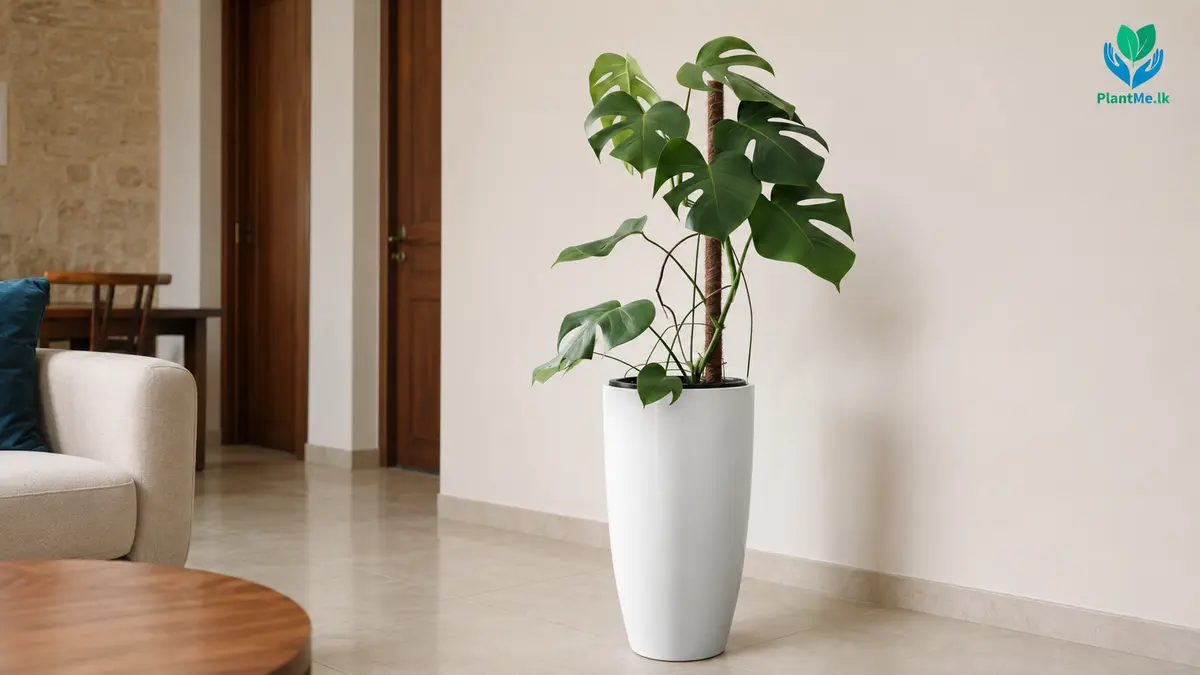
Monstera needs more than an attractive empty corner. Give its broad leaves bright indirect light, enough floor and canopy space, an airy root zone and support as the plant matures.
Quick answer: What does Monstera need indoors?
Monstera deliciosa grows best in bright indirect light, an airy well-drained mix, thorough watering after the upper medium partly dries and sturdy support as stems lengthen. Allow space for broad leaves and protect them from harsh direct sun and narrow walkways.
Leaf splits, called fenestrations, depend on maturity, light, support and growth conditions. A young leaf without splits is not automatically unhealthy.
The essential conditions
Monstera care at a glance
Plan for the mature plant, not only the pot footprint shown on the listing.
| Factor | Recommended approach | What to avoid |
|---|---|---|
| Light | Bright indirect; gentle acclimatised sun may be tolerated | Harsh sudden midday sun |
| Water | Water after upper medium partly dries; drain | Constantly wet root zone |
| Medium | Airy, moisture-retentive but well-drained mix | Dense compacted soil |
| Support | Stable pole or support as stems lengthen | Tying petioles tightly |
| Space | Canopy and care clearance around the pot | Narrow corridors and busy doorways |
Placement determines growth
Best light for Monstera
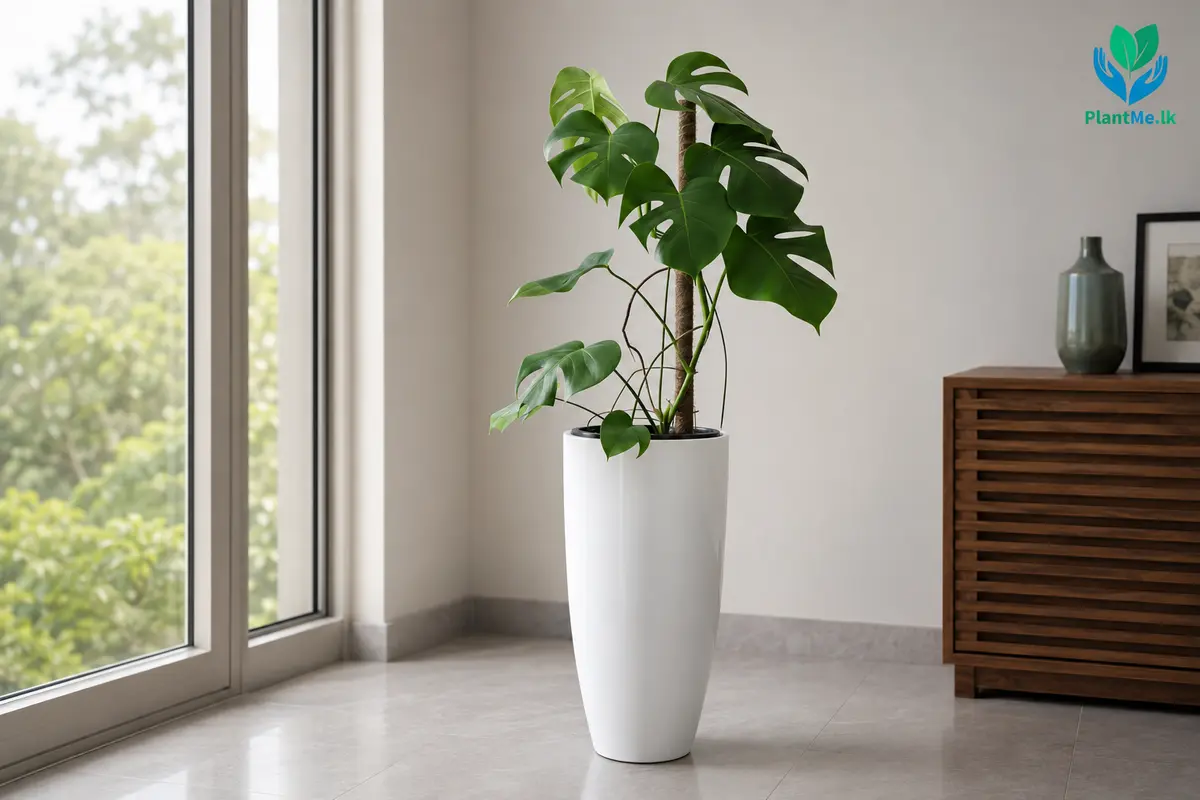
Bright indirect light supports larger leaves and stronger growth. A plant several metres into a room may receive far less light than the room’s brightness suggests.
Acclimatise slowly to any direct sun. Pale bleached patches on the window-facing side can indicate scorch rather than thirst.
- Keep leaves within useful filtered daylight.
- Watch the size and spacing of new leaves.
- Check whether growth leans toward one window.
- Avoid hot glass and direct AC discharge.
- Rotate carefully without twisting supported stems.
More fertiliser cannot make up for insufficient light. Correct the position before changing the feeding programme.
Check before watering
How and when to water Monstera
Test below the surface. When the upper layer has partly dried and the lower root zone is no longer saturated, water the mix evenly.
Let excess drain from the inner pot and empty any water retained by the decorative container. Large pots can stay wet deep inside after the surface looks dry.
- Inspect new yellowing, droop and pest signs.
- Test moisture at more than one point.
- Check the weight or inner pot where practical.
- Water thoroughly when partial drying is confirmed.
- Drain and return the plant without dragging the pot.
Roots, medium and routine care
Potting mix, support and large-leaf care
Use an airy aroid-friendly mix that balances moisture and oxygen. Increase pot size moderately; an oversized wet container creates more risk than benefit.
Attach the main climbing stem to a sturdy support with soft ties. Do not bind moving leaf stalks, which need to orient toward light.
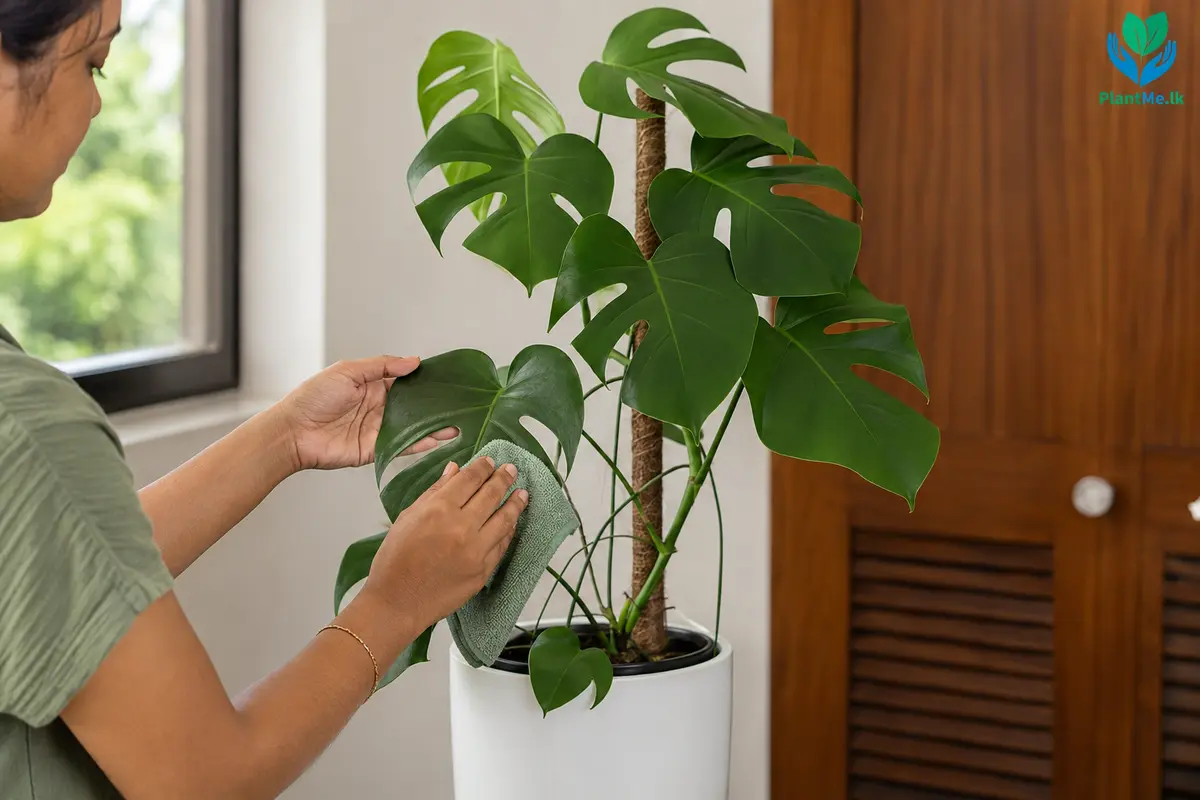
Leaf cleaning
Support each leaf and wipe with a soft damp cloth. Skip leaf-shine oils.
Support
Check ties and the pole before the plant becomes top-heavy.
Rotation
Rotate small amounts only when the support and stem allow it.
Floor care
Protect the surface and prevent hidden standing water beneath the heavy pot.
The rounded-pot Monstera and Bongo-pot Monstera create different silhouettes. Choose by room scale and access, not pot colour alone.
Diagnose before treating
Common Monstera problems
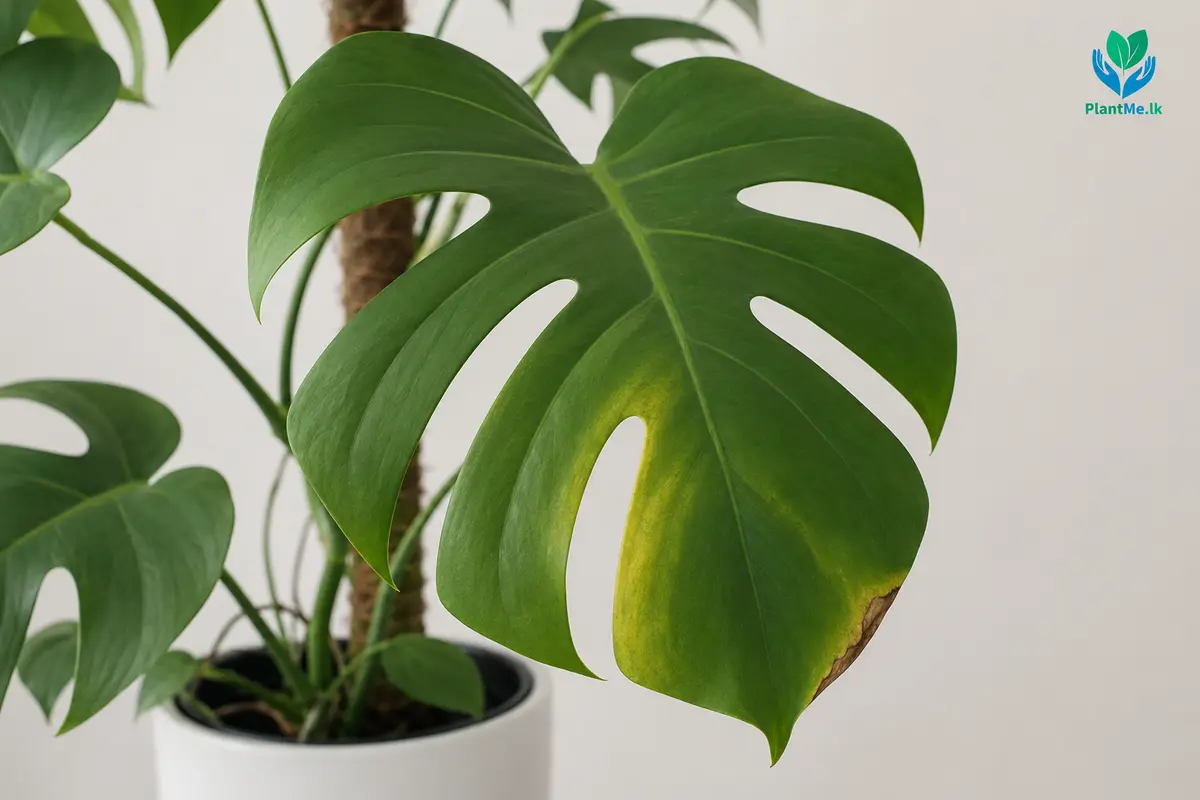
A single old leaf can yellow naturally. Patterns across new growth, roots and several leaves are more diagnostic.
| Symptom | Likely causes | What to check | Practical action |
|---|---|---|---|
| Yellow leaves | Excess water, root stress, ageing | Moisture depth and root smell | Correct watering; inspect roots |
| Brown edges | Dryness, salts, sun or damage | Airflow and watering history | Correct cause; trim dead tissue |
| Drooping | Thirst, root loss or relocation | Medium and stem firmness | Diagnose roots before watering |
| Small unsplit leaves | Youth, low light or no support | Age, light and climbing habit | Improve conditions and wait |
| Pests | Thrips, scale or mites | Leaf undersides and new growth | Isolate and use labelled treatment |
Do not cut every unsplit leaf. Fenestration is developmental, not a decorative feature that can be forced on a deadline.
Repotting and propagation
Repotting and propagating Monstera
A Monstera cutting must include a node. A leaf and petiole without a node can remain attractive in water but cannot produce a complete new vine.
- Find a healthy stem section with a clear node and aerial root if available.
- Cut below the node with a sterilised tool.
- Root in clean water or an airy propagation medium.
- Wait for a stable root system and new growth.
- Pot at the original node depth and add support early.
Repot a large PlantMe specimen only when roots, drainage or stability require it. Ask for help if the current premium pot is difficult to move safely.
Apply the guide
Plan for Monstera growth, not today’s photo
A healthy Monstera changes the room over time. Leave space for that change.
Newly placed floor plant
Keep the planned bright position stable for the first weeks. Do not rotate aggressively, repot and fertilise at the same time.
Plant beginning to sprawl
Add a support to the main stem before it becomes top-heavy. Guide aerial roots toward the support or medium without forcing leaf stalks.
Large plant near a walkway
Move furniture or choose a narrower plant rather than repeatedly cutting healthy leaves. The mature canopy must remain outside the circulation route.
Use these scenarios as a starting point, then confirm the exact PlantMe product, current listing and conditions before acting on Monstera deliciosa care Sri Lanka.
Clear answers
Frequently asked questions
Why does a Monstera have leaves without splits?
Young plants and leaves grown with weak light or no climbing support may remain unsplit. Maturity and conditions both matter.
Does Monstera need direct sunlight?
No. Bright indirect light is a reliable target. Any direct sun should be gentle and introduced gradually.
How often should it be watered?
Water after the upper medium partly dries and the lower root zone is not saturated. Do not use a fixed interval.
When does it need support?
Add support before stems sprawl or become top-heavy. It is easier and safer to guide young growth.
Why are the leaves turning yellow?
Check moisture depth, roots, light and recent changes. Repeated yellowing in wet mix often points to root stress.
Evidence base
Sources and further reading
This guide combines PlantMe product context with established horticultural guidance. Always adapt general advice to the exact specimen, pot, growing medium and room.
Browse PlantMe Monstera products
Compare the premium Bongo and rounded-pot formats, then measure canopy space and delivery access before ordering.
Product availability, plant size, pot combinations, delivery charges and care needs can change. Confirm the current listing and your room conditions before ordering.
