
May
PlantMe practical guide
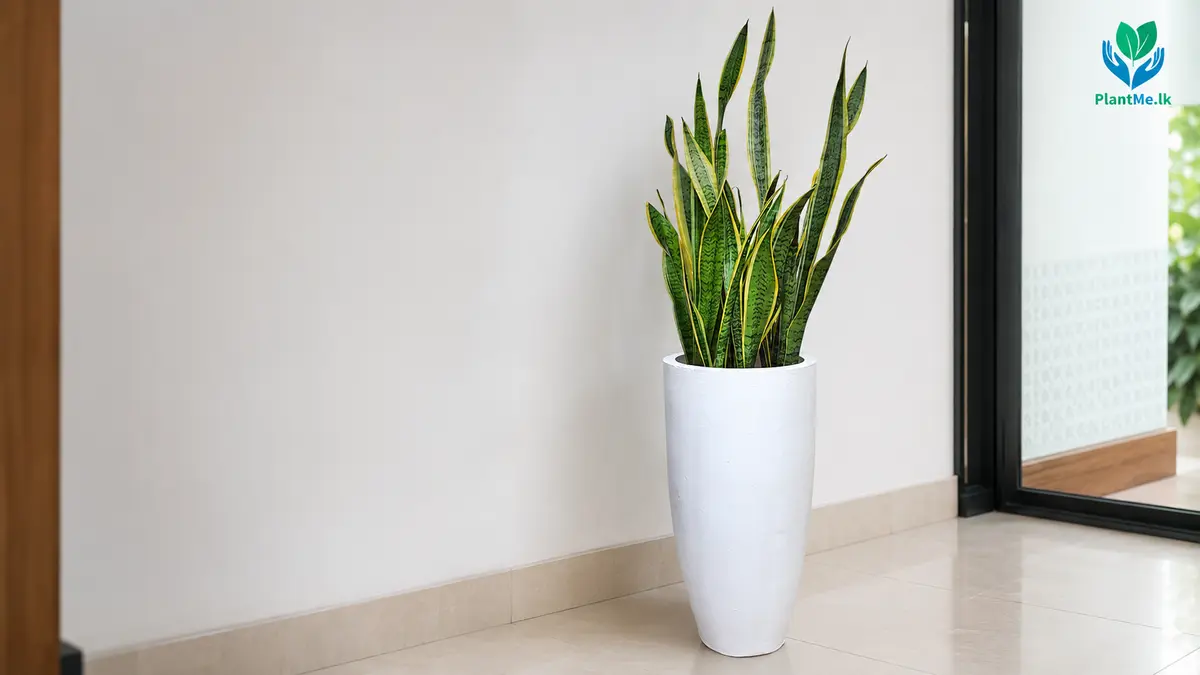
Snake Plant Care in Sri Lanka
Snake Plant is tolerant, but the usual ‘water every week’ advice can destroy it. Match water to drying, give it usable light and understand what the decorative pot is doing around the roots.
Quick answer: How do you care for a Snake Plant?
Place Snake Plant in medium to bright indirect light, although it can tolerate softer light, and let the growing medium dry well before watering again. Use a well-drained medium, keep water from standing inside a decorative outer pot and protect the leaves from abrupt harsh sun.
Do not follow a rigid weekly schedule. A large plant in a bright warm room and a compact plant in a dim air-conditioned office use water at different speeds.
The essential conditions
Snake Plant care at a glance
Use this table as a decision framework, not a calendar. Inspect the plant and medium before acting.
| Factor | Recommended approach | What to avoid |
|---|---|---|
| Light | Medium to bright indirect light; acclimatise to stronger sun | A dark windowless room or sudden harsh sun |
| Water | Water after substantial drying, then drain appropriately | Small frequent top-ups or standing water |
| Medium | Open, well-drained potting mix or a correctly managed LECA system | Dense medium that stays wet around roots |
| Temperature | Stable warm indoor conditions | Cold AC discharge and extreme heat against glass |
| Routine | Wipe leaves, inspect bases and rotate when needed | Constant relocation and unnecessary fertiliser |
Placement determines growth
Best light for Snake Plant
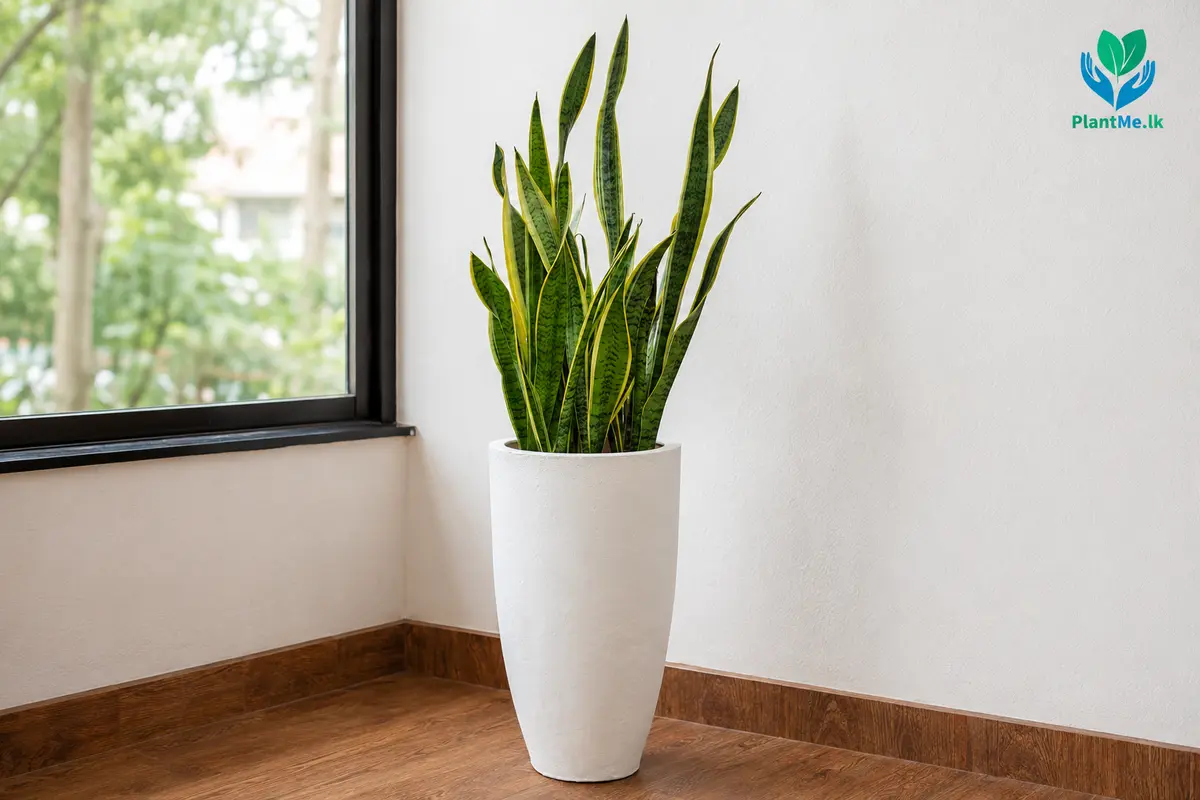
Snake Plant tolerates a useful range of indoor light, but brighter indirect light normally supports stronger, more compact growth. In softer light, growth slows and the pot remains wet longer.
Direct tropical sun through an uncovered window can scorch a plant that has been grown in filtered light. Move it gradually over several days or weeks if stronger exposure is intended.
- Keep a visible daylight source in the room.
- Watch for leaning or unusually weak new growth.
- Move closer to the window before adding fertiliser.
- Reduce watering frequency when light decreases.
- Rotate only enough to keep growth balanced.
A Snake Plant surviving in low light is not evidence that darkness is ideal. Survival, active growth and good form are different standards.
Check before watering
How and when to water a Snake Plant
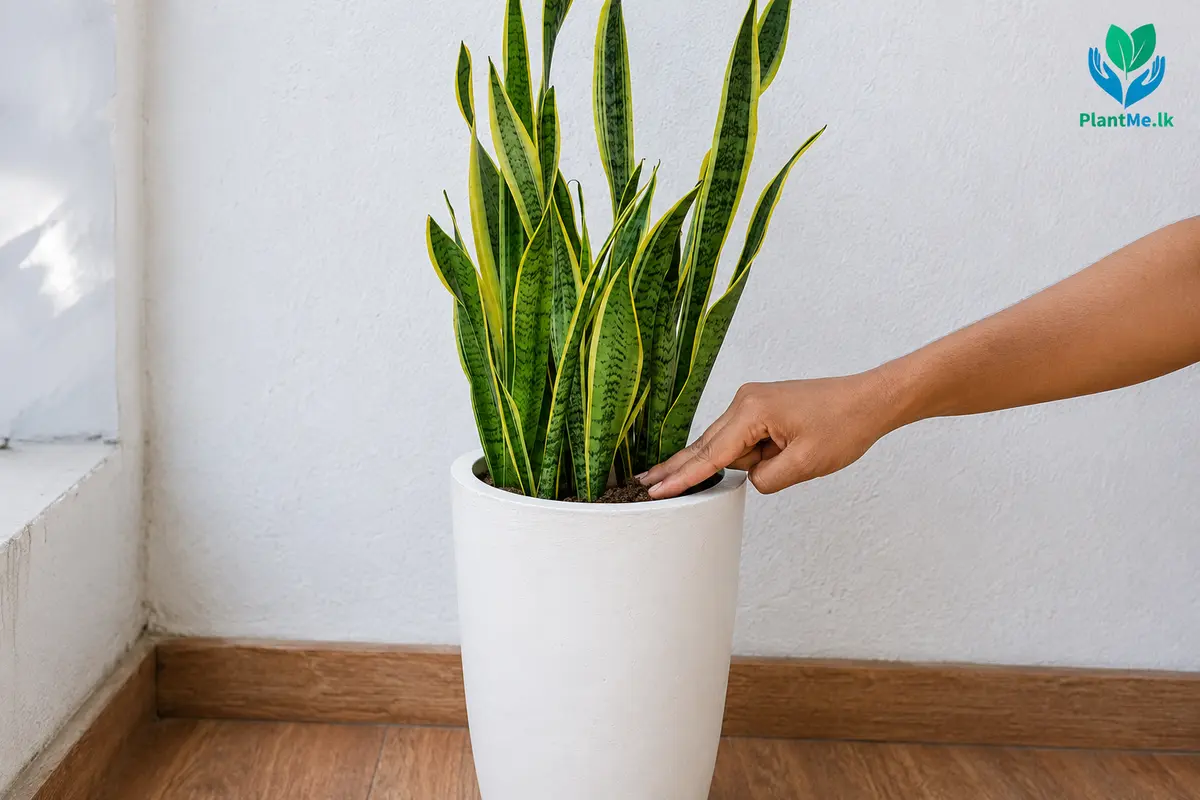
Check more than the top decorative layer. Test the actual growing medium deeper in the pot where roots are active. The pot should feel lighter, and the lower medium should not still be cold and wet.
When watering a soil-grown plant, wet the root zone evenly and allow excess to leave the inner pot where drainage exists. Remove any water trapped in the outer container.
- Check the plant base for softness and the leaves for new yellowing.
- Test the growing medium below the surface.
- Lift the inner pot if the product design allows it.
- Water thoroughly only when sufficient drying has occurred.
- Drain and return the plant to its stable position.
Roots, medium and routine care
Pot, drainage, mix and routine cleaning
Snake Plant roots need oxygen. A well-drained medium and correctly sized pot reduce the time water remains around the roots. Moving a small root system into an oversized wet pot increases risk.
Fertiliser is not a cure for weak light or damaged roots. Feed modestly only during active healthy growth, using a suitable houseplant product according to its label.
Leaf cleaning
Support each leaf and wipe dust with a soft damp cloth. Avoid oily shine products.
Air conditioning
Keep the plant beside, not directly under, the cold airflow path.
Rotation
Turn the pot gradually if growth leans, while keeping the overall location stable.
Pest checks
Inspect leaf bases and both surfaces for scale, mealybugs or other recurring pests.
Cut a severely damaged leaf near the base with a clean tool when removal is necessary. Cosmetic scars do not heal, but a firm damaged leaf may still function.
Diagnose before treating
Common Snake Plant problems
One symptom can have several causes. Confirm moisture, light, root condition and recent changes before treating.
| Symptom | Likely causes | What to check | Practical action |
|---|---|---|---|
| Yellow leaf | Excess water, old leaf, sudden stress | Medium depth, leaf base, pattern across plant | Correct the cause; remove fully failed tissue |
| Soft or mushy base | Rot from prolonged wetness | Roots, smell, retained outer-pot water | Isolate, remove rot and repot viable tissue |
| Brown tip | Physical damage, salt build-up, dry airflow | Whether damage is isolated or repeated | Correct the source; trim only dead tissue |
| Leaning growth | Light direction, loose roots or physical pressure | Window position and root stability | Improve placement and stabilise the root ball |
| Pests | Scale or mealybugs | Leaf bases and sticky residue | Isolate and use an appropriate labelled treatment |
When rot is suspected, delay is dangerous. Stop routine watering, separate the plant from others and examine viable roots and firm tissue.
Repotting and propagation
How to propagate a Snake Plant
Division is the most predictable way to preserve the form of a mature clump. Leaf cuttings can work, but some variegated forms may not reproduce the same pattern.
- Choose a healthy plant with several established shoots.
- Remove the plant and identify natural rhizome divisions.
- Use a clean tool to separate sections with roots attached.
- Pot each division in a suitable well-drained medium.
- Wait for the medium to approach the correct dryness before normal watering.
Repot only when there is a reason, such as severe crowding, root or drainage problems, or a damaged pot. A slightly tight pot is not automatically an emergency.
Apply the guide
Snake Plant care in common Sri Lankan interiors
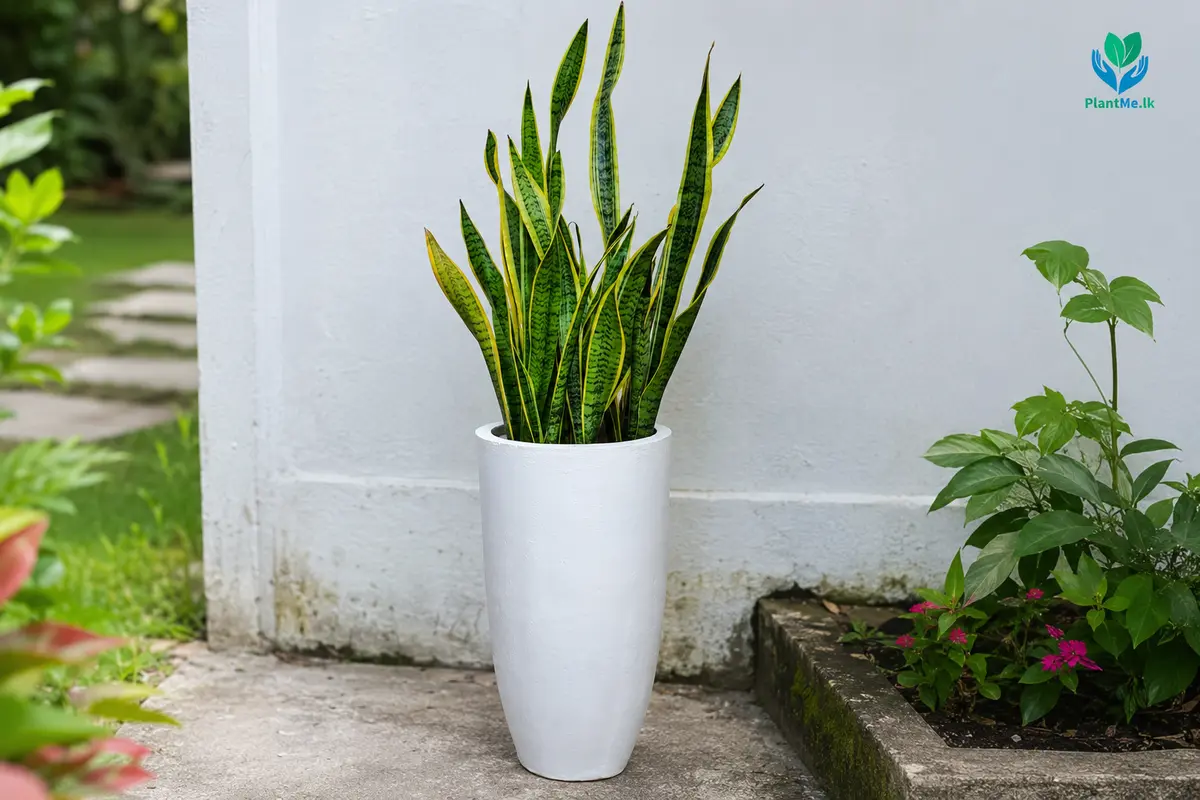
Warm humid weather outside does not mean every indoor root zone dries quickly. Pot construction, shade and air conditioning can reverse expectations.
Bright non-air-conditioned room
The plant may dry faster and grow more actively. Check rather than assuming that a previous office interval still applies, and protect leaves from sudden hard midday sun.
Cool air-conditioned office
The air can dry leaf tips while the lower pot remains wet for longer. Keep the plant out of the vent path and inspect the medium before every watering.
Glass LECA product
Use visible roots, water clarity and reservoir depth. Do not apply the soil rule of soaking and draining to a genuine LECA bowl, and do not keep every root submerged.
Use these scenarios as a starting point, then confirm the exact PlantMe product, current listing and conditions before acting on snake plant care Sri Lanka.
Clear answers
Frequently asked questions
How often should a Snake Plant be watered?
There is no safe universal interval. Water after the growing medium has dried substantially, considering light, pot size, airflow and season.
Can a Snake Plant grow in low light?
It can tolerate lower light, but growth slows and overwatering risk increases. Usable indirect light is still required.
Why are the leaves becoming soft?
Softness near the base often indicates prolonged wetness and possible rot. Inspect roots and retained water immediately.
Does a Snake Plant need direct sun?
No. Bright indirect light is a reliable indoor target. Acclimatised plants may handle some direct sun, but sudden harsh exposure can scorch leaves.
Should I cut damaged leaves?
Remove fully failed, soft or diseased tissue with a clean tool. A firm leaf with cosmetic damage can remain if the appearance is acceptable.
Evidence base
Sources and further reading
This guide combines PlantMe product context with established horticultural guidance. Always adapt general advice to the exact specimen, pot, growing medium and room.
Choose a Snake Plant and pot
Compare current PlantMe Snake Plant formats, then confirm whether the chosen product is soil-grown or established in LECA before applying care advice.
Product availability, plant size, pot combinations, delivery charges and care needs can change. Confirm the current listing and your room conditions before ordering.
