
Feb
PlantMe practical guide
ZZ Plant Care Guide for Sri Lankan Homes and Offices
ZZ Plant stores water in thick underground rhizomes, which makes it forgiving of a late watering and vulnerable to repeated wetness. Light, drainage and restraint matter more than attention.
Quick answer: How do you care for a ZZ Plant?
Give ZZ Plant low to bright indirect light, with brighter indirect light supporting stronger growth, and water only after the medium has dried substantially. Use a free-draining mix and pot, keep it away from direct AC airflow and do not force growth with frequent fertiliser.
Its fleshy rhizomes and leaf stalks store water. That reserve explains both its drought tolerance and the speed at which wet roots can become a serious problem.
The essential conditions
ZZ Plant care at a glance
A healthy ZZ Plant often grows slowly. Judge it by firm stems, healthy roots and stable foliage rather than expecting continuous new shoots.
| Factor | Recommended approach | What to avoid |
|---|---|---|
| Light | Low to bright indirect; best growth in brighter indirect light | Harsh direct sun and permanent darkness |
| Water | Allow substantial drying; water thoroughly and drain | Small frequent top-ups |
| Medium | Well-drained potting mix in a correctly sized inner pot | Dense wet soil in an oversized pot |
| Environment | Stable warm room away from direct AC discharge | Cold draughts and repeated relocation |
| Routine | Wipe leaves, rotate gradually, inspect bases | Leaf-shine oils and unnecessary feeding |
Placement determines growth
Best light for ZZ Plant
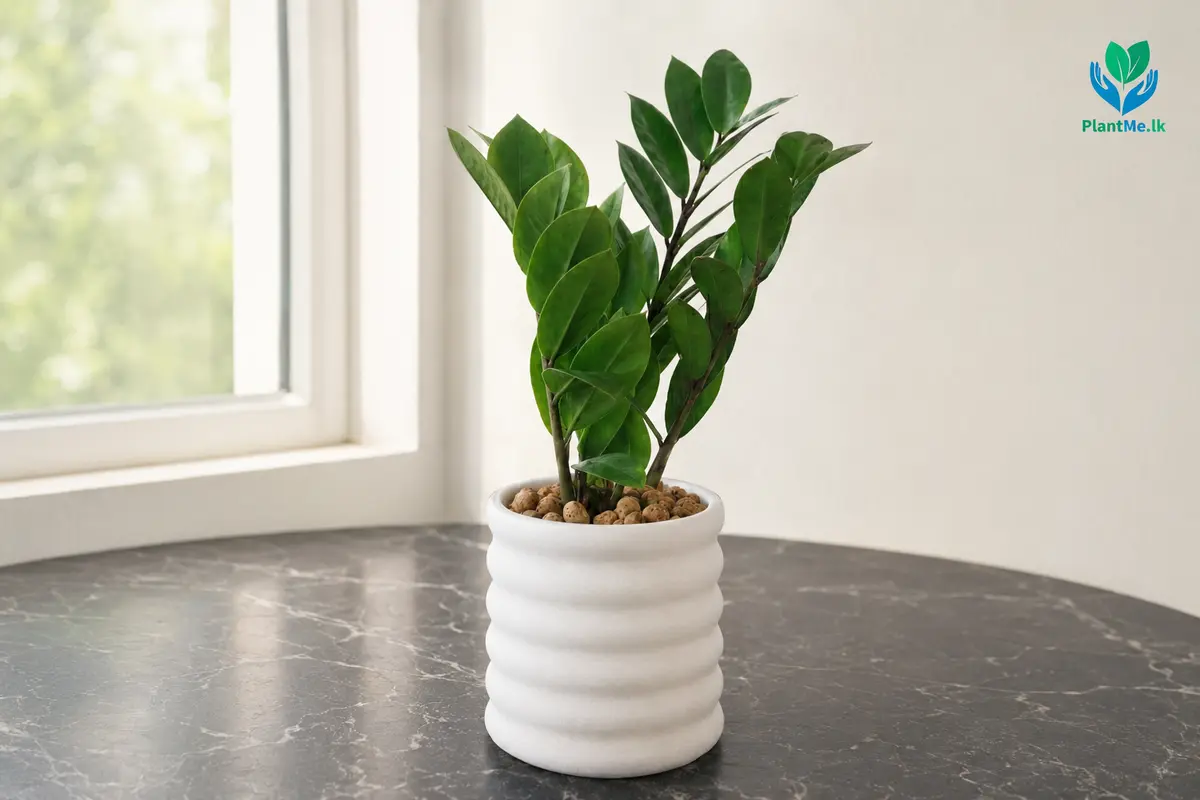
ZZ Plant tolerates lower light better than many houseplants, but tolerance is not the same as active growth. Brighter indirect light usually produces denser, stronger shoots.
Move a plant closer to appropriate light when new growth stretches or leans. Do not put a shade-grown plant directly into harsh midday sun.
- Keep a usable daylight source in the room.
- Watch the length and direction of new shoots.
- Reduce watering as light and growth decrease.
- Keep leaves away from hot glass.
- Rotate gradually rather than changing rooms repeatedly.
In a windowless office, use a suitable grow light or choose a non-living display. Ceiling illumination is not automatically adequate plant light.
Check before watering
How to water without causing rot
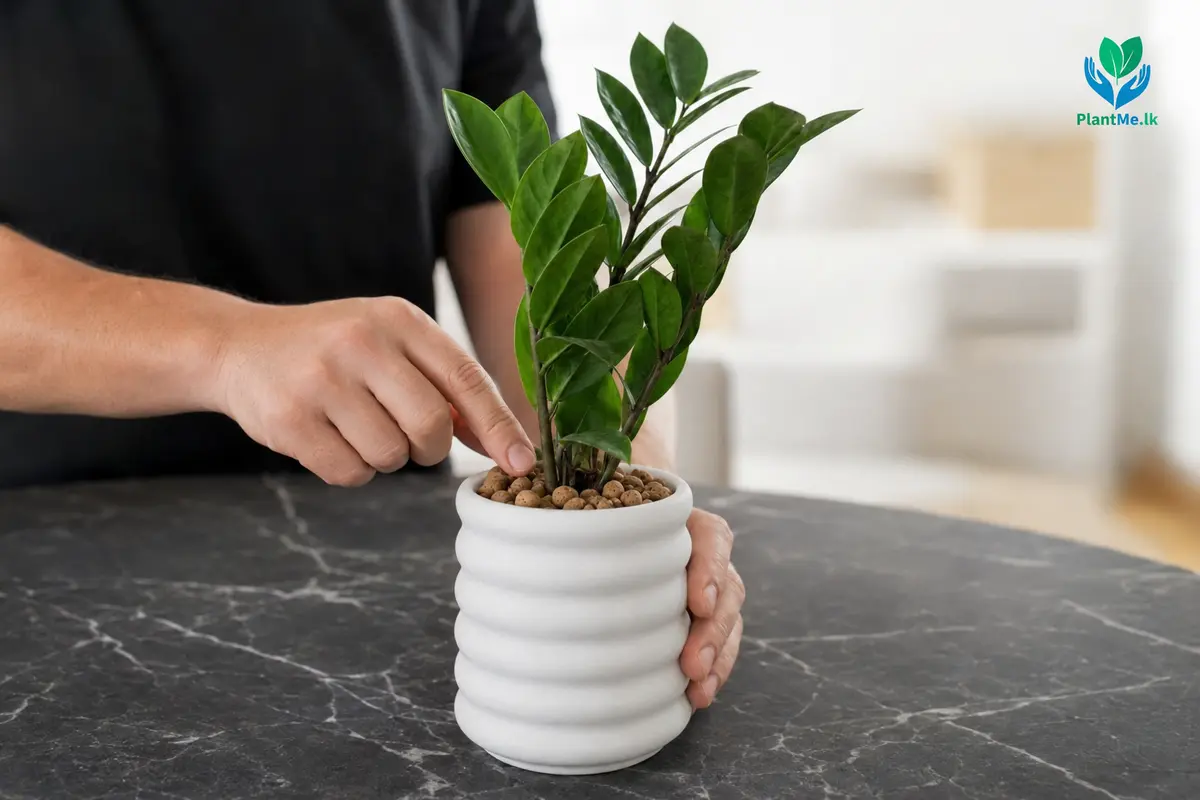
Test the actual growing medium, not the decorative surface. The lower pot should no longer feel persistently wet or heavy before another watering.
When watering, wet the root zone evenly and allow the inner pot to drain. Never let water accumulate unseen inside the decorative Ripple pot.
- Check for yellow lower leaves and soft bases.
- Test moisture several centimetres into the medium.
- Compare the pot weight with its known dry weight.
- Water only after sufficient drying.
- Drain fully and empty the outer pot.
Roots, medium and routine care
Potting mix, drainage and routine care
Use an open houseplant mix that retains some moisture but allows air to return around the rhizomes. Repot only one practical size larger when roots genuinely need space.
Feed lightly during active growth using a suitable balanced product. Fertiliser does not repair rotten roots or compensate for low light.
Leaf cleaning
Wipe glossy leaflets with a soft damp cloth so dust does not hide pests.
Rotation
Turn gradually if shoots lean, while keeping the plant in one stable light zone.
Air conditioning
Position beside, not in, the cold dry air stream.
Repot timing
Repot for crowding, drainage failure or root problems, not by calendar alone.
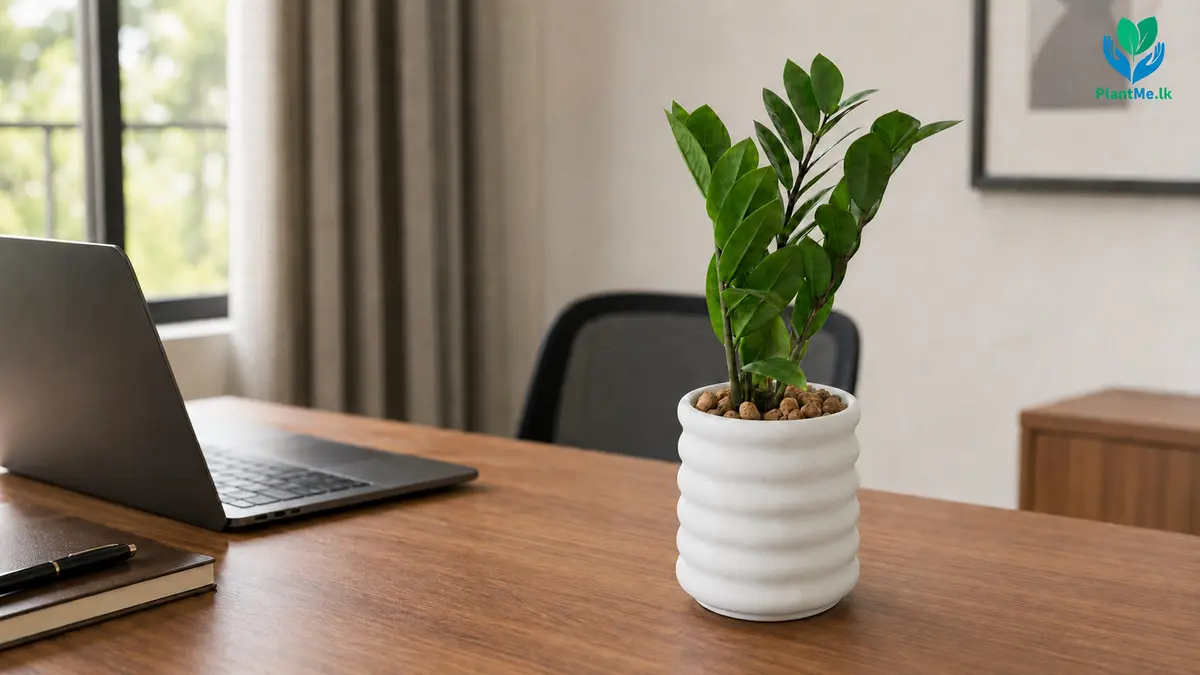
The compact PlantMe ZZ Plant in a Ripple pot works on a side table or desk only when the full leaf spread remains clear of equipment.
Diagnose before treating
Common ZZ Plant problems
Begin with the root zone. A foliage symptom often reflects what has already happened below the surface.
| Symptom | Likely causes | What to check | Practical action |
|---|---|---|---|
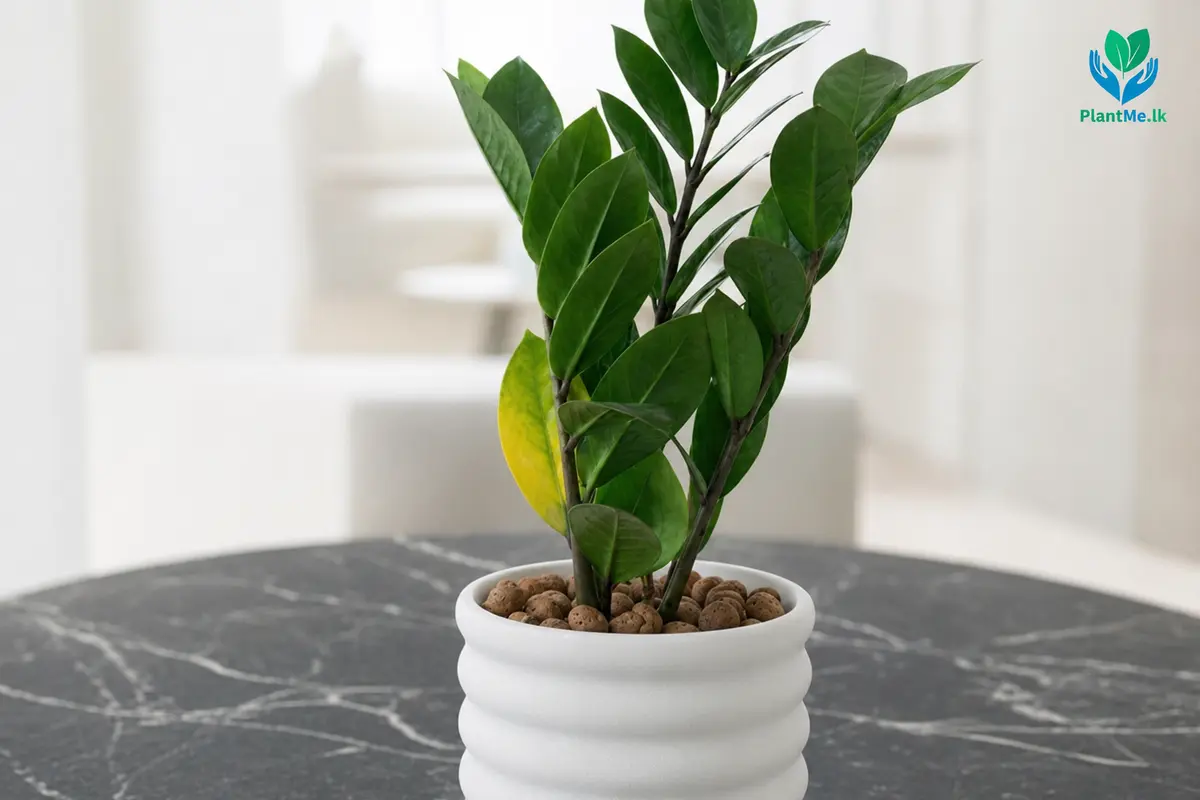
| Yellow lower leaves | Excess water, ageing or relocation stress | Moisture depth and root smell | Dry appropriately and inspect roots |
| Soft stems | Rhizome or root rot | Base firmness and hidden water | Isolate, remove rot and repot viable tissue |
| Brown tips | Dry airflow, salts or damage | AC direction and fertiliser history | Correct source; trim dead tissue only |
| Leaning shoots | Light direction or loose root ball | Nearest window and root stability | Improve placement and stabilise |
| No new growth | Naturally slow growth, low light or stress | Season, roots, light and pests | Correct conditions and wait |
One old yellow leaflet is not a crisis. Several yellowing stems combined with wet soil or softness require prompt root inspection.
Repotting and propagation
Repotting and propagating ZZ Plant
Division is the fastest way to create a second established plant. Leaf propagation is possible but slow because a new rhizome must form.
- Choose a healthy mature plant.
- Remove it and identify natural rhizome divisions.
- Separate sections with roots using clean tools.
- Pot into a well-drained mix at the original depth.
- Delay watering until the medium and cut surfaces are appropriate.
Leaflet cuttings can take many months to produce a new shoot. Do not discard a viable cutting simply because nothing appears above the medium quickly.
Apply the guide
ZZ Plant care by location
The plant adapts, but its water use and form change with the location.
Home side table
Bright indirect light supports balanced shoots. Keep the Ripple pot stable, protect furniture and check for hidden water after every watering.
Low-light office corner
Expect slower growth and slower drying. Move closer to daylight if new shoots stretch, and never compensate for low light with extra water or fertiliser.
Shared reception area
Give the plant enough width for arching leaf stalks. Assign one caretaker and keep it clear of people brushing past and the direct AC stream.
Use these scenarios as a starting point, then confirm the exact PlantMe product, current listing and conditions before acting on ZZ Plant care Sri Lanka.
Clear answers
Frequently asked questions
How often should a ZZ Plant be watered?
Only after the medium has dried substantially. The interval changes with light, pot, roots and room conditions.
Can a ZZ Plant live in low light?
It tolerates low light but grows better in brighter indirect light. Lower light also slows drying.
Why are the leaves yellow?
Common causes include prolonged wetness, natural ageing and recent stress. Check roots and moisture before watering again.
Is a ZZ Plant suitable for an office desk?
A compact specimen can suit a desk or cabinet if it receives usable light and remains clear of AC and equipment.
When should a ZZ Plant be repotted?
When root crowding, drainage failure, damaged pot or root disease creates a real need, not merely because a year has passed.
Evidence base
Sources and further reading
This guide combines PlantMe product context with established horticultural guidance. Always adapt general advice to the exact specimen, pot, growing medium and room.
Browse PlantMe ZZ Plants
View the current ZZ Ripple product and confirm the pot, size and stock before choosing it for a home or office.
Product availability, plant size, pot combinations, delivery charges and care needs can change. Confirm the current listing and your room conditions before ordering.
