
Jan
PlantMe practical guide
Pothos Plant Care: Watering, Light, Pruning and Yellow Leaves
Pothos is adaptable, but its care changes completely between soil and LECA. Identify the growing system first, then manage light, water, pruning and roots without mixing instructions.
Quick answer: How do you care for Pothos?
Keep Pothos in medium to bright indirect light, water a soil-grown plant after the upper medium partly dries, and manage a LECA-grown plant by its reservoir, roots and nutrient system. Prune above healthy nodes to control length and encourage branching.
Lower light can produce long gaps between leaves and weaker variegation. Yellow leaves are not a request for automatic watering; check roots, medium, light and natural leaf age.
The essential conditions
Pothos care at a glance
Before following any care guide, identify whether roots are in potting mix, water or a genuine LECA system.
| Factor | Recommended approach | What to avoid |
|---|---|---|
| Light | Medium to bright indirect | Harsh direct sun or a dark shelf |
| Soil watering | Water after partial drying, then drain | Constant saturation |
| LECA watering | Manage the reservoir below much of the root zone | Treating the bowl like wet soil |
| Pruning | Cut near healthy nodes to shape growth | Tearing vines or cutting without nodes |
| Feeding | Use a suitable plan for the medium | Strong unmeasured doses |
Placement determines growth
Best light for Pothos
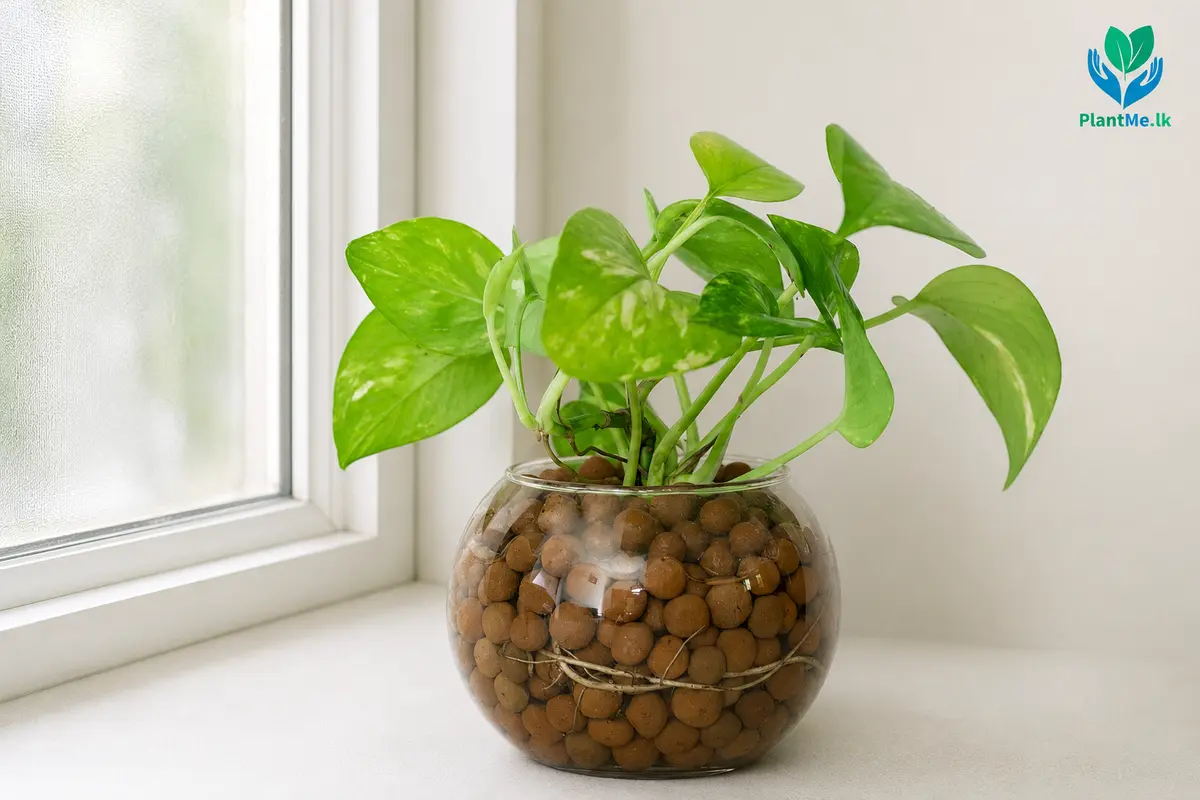
Bright indirect light supports shorter gaps between leaves and clearer variegation. Pothos survives softer light, but the vine can stretch toward the window.
Leaves may scorch in sudden harsh sun. Move the plant gradually and keep the bowl away from a sun-heated window ledge.
- Observe spacing between new leaves.
- Compare variegation on new and old growth.
- Keep the window source visible.
- Rotate the bowl gradually if growth becomes one-sided.
- Prune stretched vines only after improving light.
Pruning without correcting weak light produces another stretched vine. Fix placement first.
Check before watering
Watering Pothos in soil and LECA
For soil, test the upper growing medium and water evenly when partial drying has occurred. Let excess drain and never leave the inner pot sitting in water.
For LECA, inspect reservoir depth, root condition and water clarity through the glass. Maintain moisture access without filling the entire bowl to the stem bases.
- Confirm the growing system.
- Inspect leaves and roots before adding water.
- Check soil depth or the LECA reservoir.
- Water or refill only to the level appropriate for that system.
- Drain soil pots or clean LECA containers when needed.
Roots, medium and routine care
Potting mix, LECA, pruning and routine care
A soil-grown Pothos needs an airy potting mix and drainage. A LECA system needs clean expanded clay, water management and suitable nutrients because the medium itself is inert.
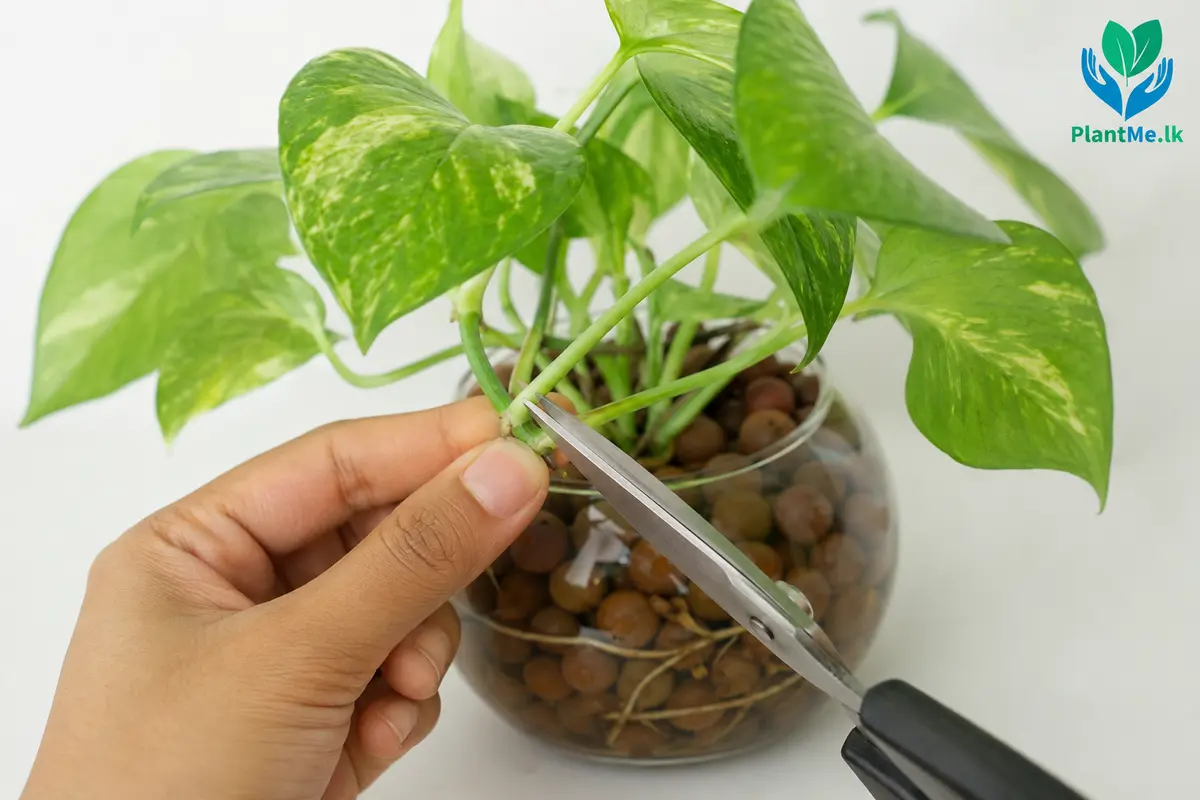
To prune, find a node where a leaf or aerial root emerges. Make a clean cut, then keep the parent plant in improved light to support fuller regrowth.
Fuller growth
Prune long vines and position the plant in brighter indirect light.
Leaf cleaning
Wipe leaves gently and support the blade with the other hand.
Support or trail
Choose whether the plant will trail, climb a support or remain compact.
Root checks
Use the glass bowl to monitor root firmness, algae and water clarity.
Compare PlantMe’s LECA collection with the Pothos tower format before choosing a table or floor presentation.
Diagnose before treating
Common Pothos problems
The location of damage and the growing system narrow the diagnosis.
| Symptom | Likely causes | What to check | Practical action |
|---|---|---|---|
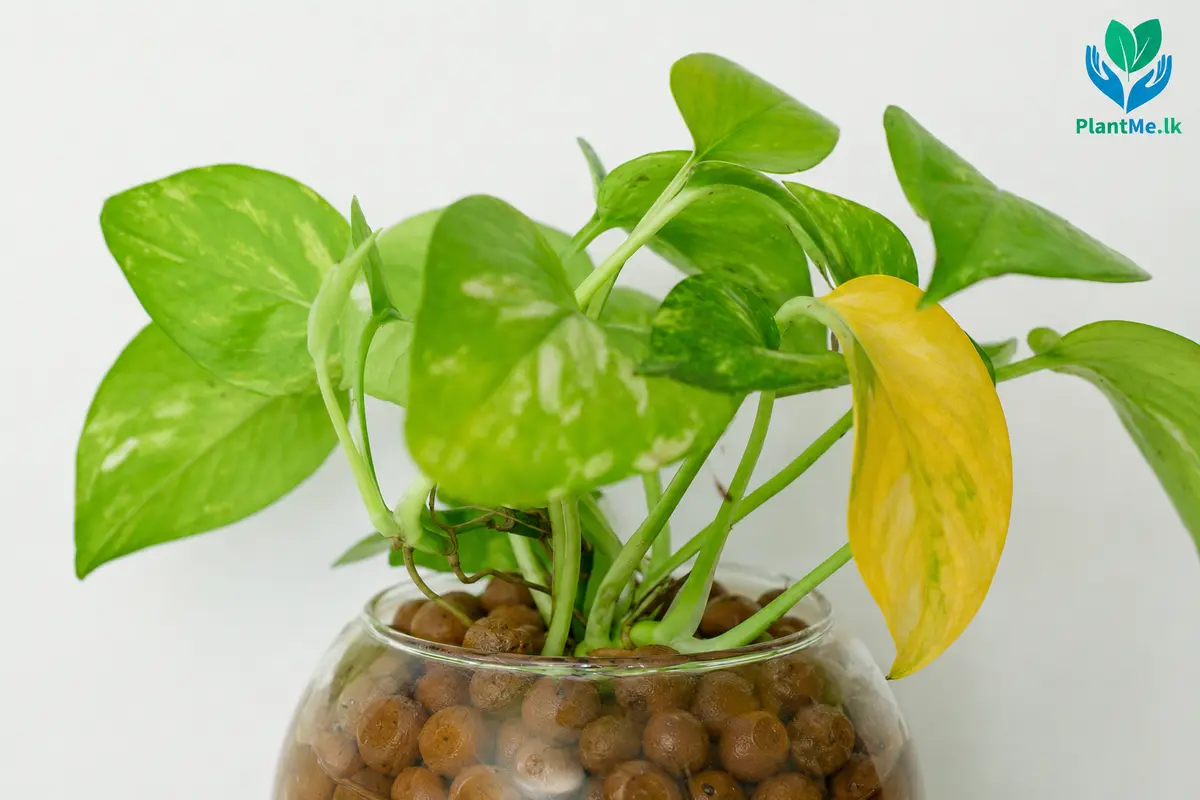
| Yellow leaf | Overwatering, old leaf, root stress | Medium or reservoir and root texture | Correct cause; remove failed leaf |
| Brown edge | Dryness, salts, sun or damage | Water history and exposure | Correct source and trim dead edge |
| Long bare gaps | Weak light or missed pruning | Distance to window | Improve light and prune |
| Lost variegation | Weak light or genetic reversion | Pattern on new growth | Improve light; prune reverted growth if appropriate |
| Dark soft roots | Rot or transition failure | Odour, slime and residual soil | Remove decay and reset clean system |
One yellow older leaf can be normal. Repeated yellowing combined with wet roots needs prompt correction.
Repotting and propagation
How to prune and propagate Pothos
Pothos roots readily from stem cuttings when each cutting contains at least one healthy node.
- Choose a healthy vine and locate the nodes.
- Cut with clean scissors just below a node.
- Remove the lowest leaf so it is not submerged or buried.
- Root in clean water, LECA or a suitable propagation medium.
- Pot or transfer only after a healthy root system develops.
Several shorter cuttings placed together can create a fuller pot faster than one long bare vine, but avoid crowding a weak root system.
Apply the guide
Pothos formats need different routines
Pothos can trail, climb or remain compact. The support and medium determine how it should be managed.
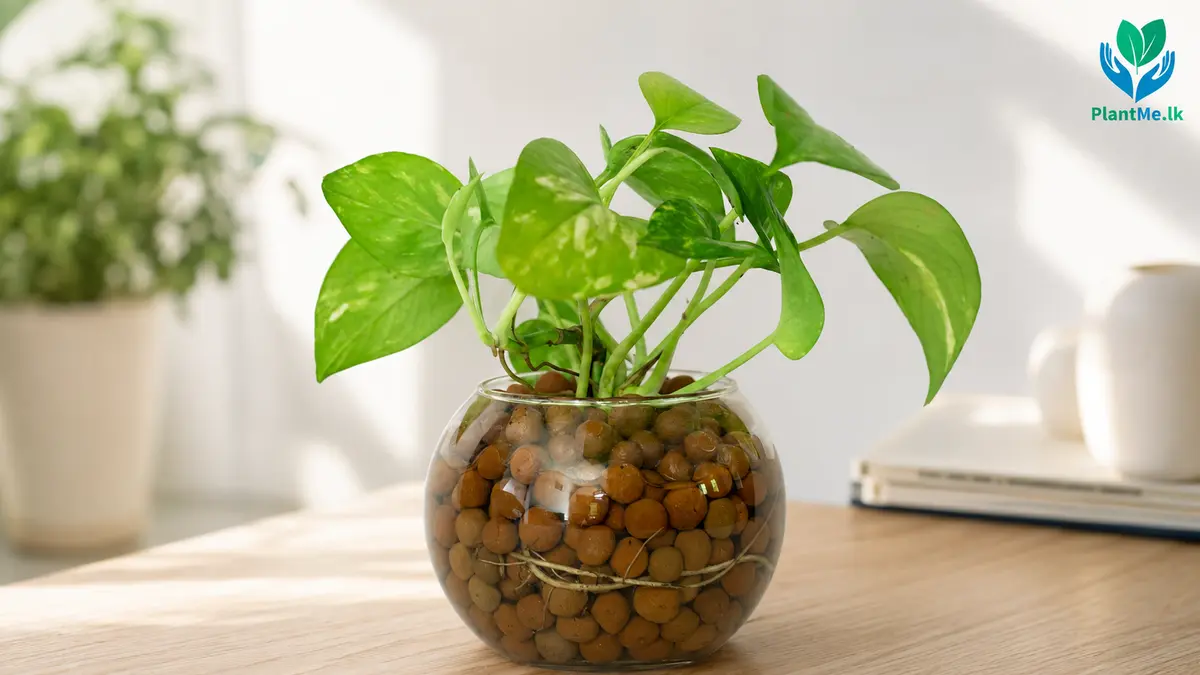
Rounded LECA bowl
Keep the vine compact with pruning, monitor visible roots and clean the glass. This format suits tables but should not be allowed to tangle around office equipment.
Soil-grown hanging vine
Water after partial drying and allow full drainage. Give the crown light, not only the hanging ends, so the top does not become bare.
Climbing tower
Secure growth to the support, provide brighter indirect light and measure the final floor and canopy space. Larger leaves require a stable root system and consistent care.
Use these scenarios as a starting point, then confirm the exact PlantMe product, current listing and conditions before acting on Pothos plant care Sri Lanka.
Clear answers
Frequently asked questions
How often should Pothos be watered?
Watering depends on whether it is in soil or LECA. Check partial soil drying or the LECA reservoir and roots rather than using one interval.
Can Pothos grow in water permanently?
It can grow hydroponically with clean water, oxygen and nutrients, but plain stagnant water is not a complete long-term system.
Why are the leaves turning yellow?
Possible causes include excessive water, root problems, old leaf age or sudden environmental change. Inspect the growing system.
How can I make Pothos look fuller?
Improve light, prune above healthy nodes and root selected cuttings back into the pot when appropriate.
Is Pothos suitable for an office?
Yes, when it has usable light, controlled vines and a named caretaker who understands the growing medium.
Evidence base
Sources and further reading
This guide combines PlantMe product context with established horticultural guidance. Always adapt general advice to the exact specimen, pot, growing medium and room.
Browse PlantMe Pothos products
Choose the rounded glass LECA bowl for a compact table display or compare climbing Pothos formats for larger spaces.
Product availability, plant size, pot combinations, delivery charges and care needs can change. Confirm the current listing and your room conditions before ordering.
