
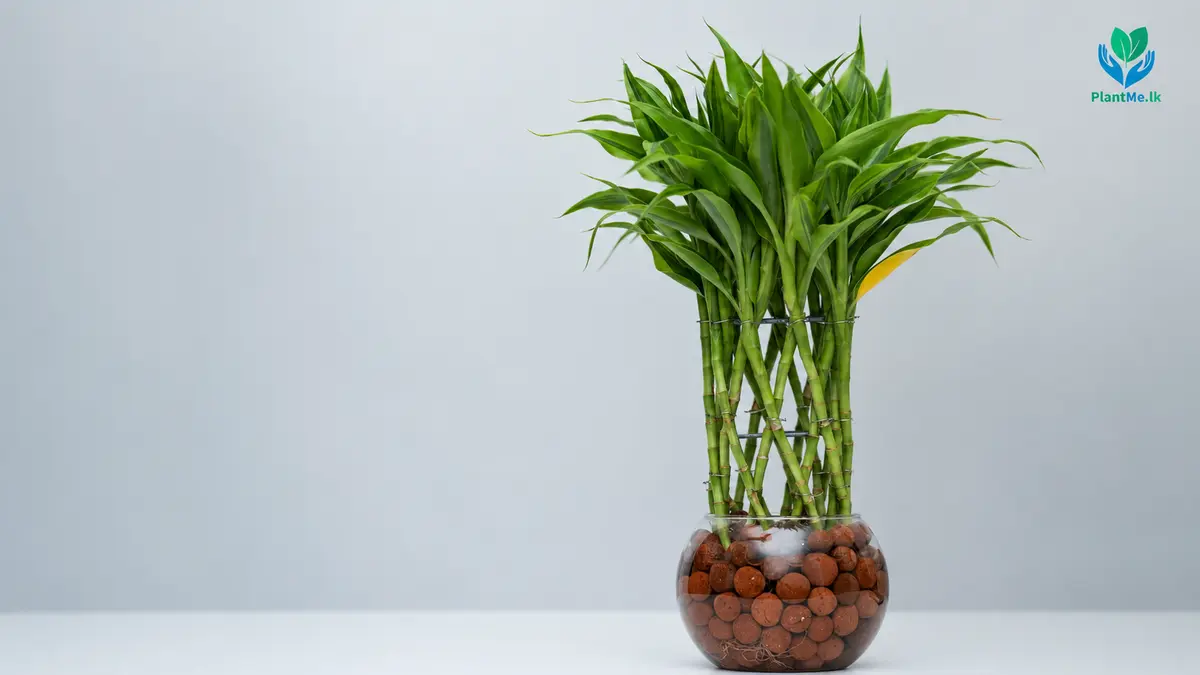
Mar
PlantMe practical guide
Why Is My Lucky Bamboo Turning Yellow?
A yellow leaf, a brown tip and a soft yellow stem are not the same problem. Diagnose the plant part first, then check light, water, roots, fertiliser and airflow.
Quick answer: What causes Lucky Bamboo to turn yellow?
Common causes include harsh direct sun, stagnant or unsuitable water, incorrect reservoir depth, damaged roots, excess fertiliser and temperature stress. First identify whether the damage affects a tip, whole leaf, one stem section or the entire stem.
Yellow tissue does not become green again. The goal is to stop the cause, remove failed tissue when appropriate and protect firm healthy stems and roots.
The essential conditions
yellowing Lucky Bamboo care at a glance
Use the affected plant part to narrow the cause before changing several conditions at once.
| Factor | Recommended approach | What to avoid |
|---|---|---|
| Leaf tip | Check mineral build-up, water source and AC airflow | Cutting the whole healthy stem |
| Whole leaf | Check age, sun exposure and root condition | Assuming every yellow leaf means thirst |
| One stem section | Test firmness and inspect roots below it | Leaving soft tissue connected |
| Entire stem | Separate from healthy stems and seek prompt advice | Waiting for the yellowing to reverse |
| Cloudy water | Clean container, LECA and affected roots | Adding fertiliser to dirty water |
Placement determines growth
Too much direct sun and light stress
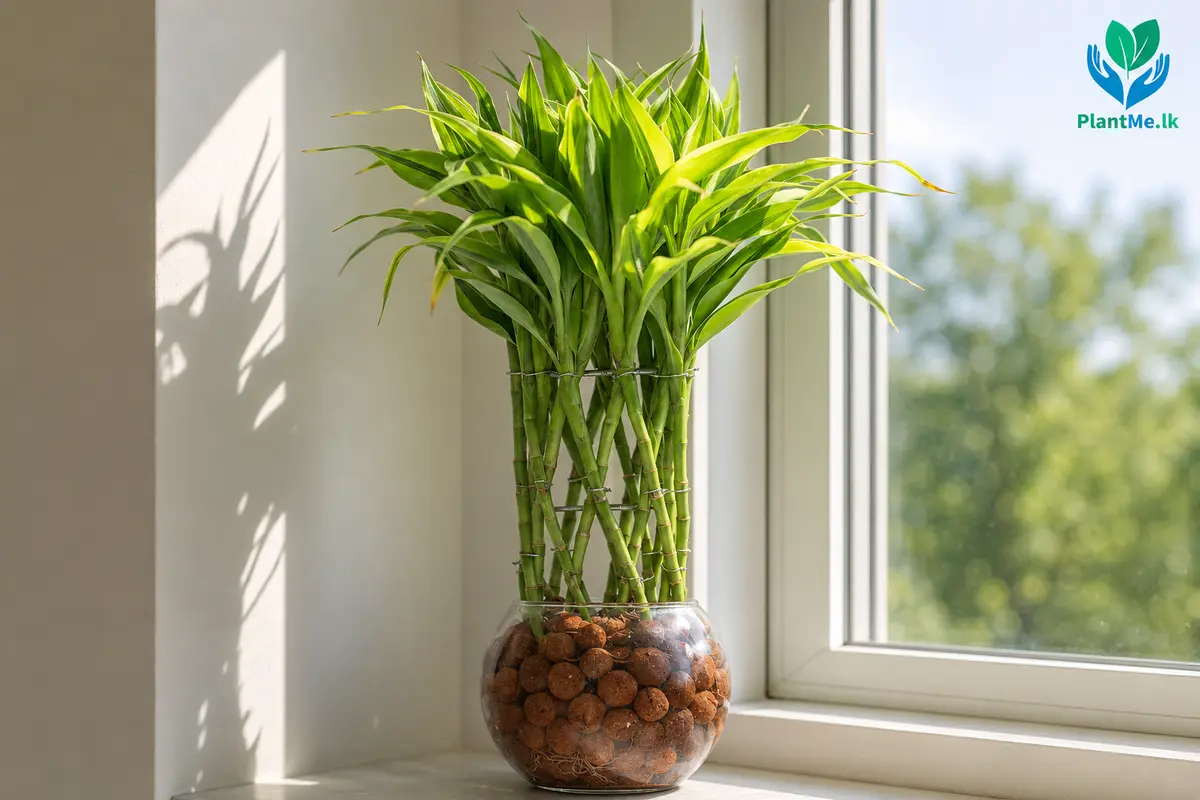
Lucky Bamboo prefers filtered light. A hard sun patch through uncovered glass can bleach leaves, create dry patches and heat the clear container.
Move the plant back from harsh exposure or use a sheer curtain. Do not transfer it abruptly into a dark corner; preserve useful indirect daylight.
- Look for damage concentrated on the window-facing side.
- Check whether the glass becomes hot during midday.
- Observe hard shadows across the leaves.
- Move gradually to a filtered position.
- Photograph the plant before and after the change.
If yellowing continues after the light correction, inspect the water, roots and stem firmness instead of making repeated placement changes.
Check before watering
Water quality, water level and root problems
Stagnant water, debris, decaying roots and a reservoir that covers too much stem can all cause stress. Clear water alone does not prove the roots are healthy.
Inspect root colour, texture and smell. Firm roots are more promising than black, slimy or foul-smelling tissue. Clean the system before adding any nutrient.
- Separate healthy and failing stems where the arrangement allows.
- Inspect the reservoir, roots and submerged stem depth.
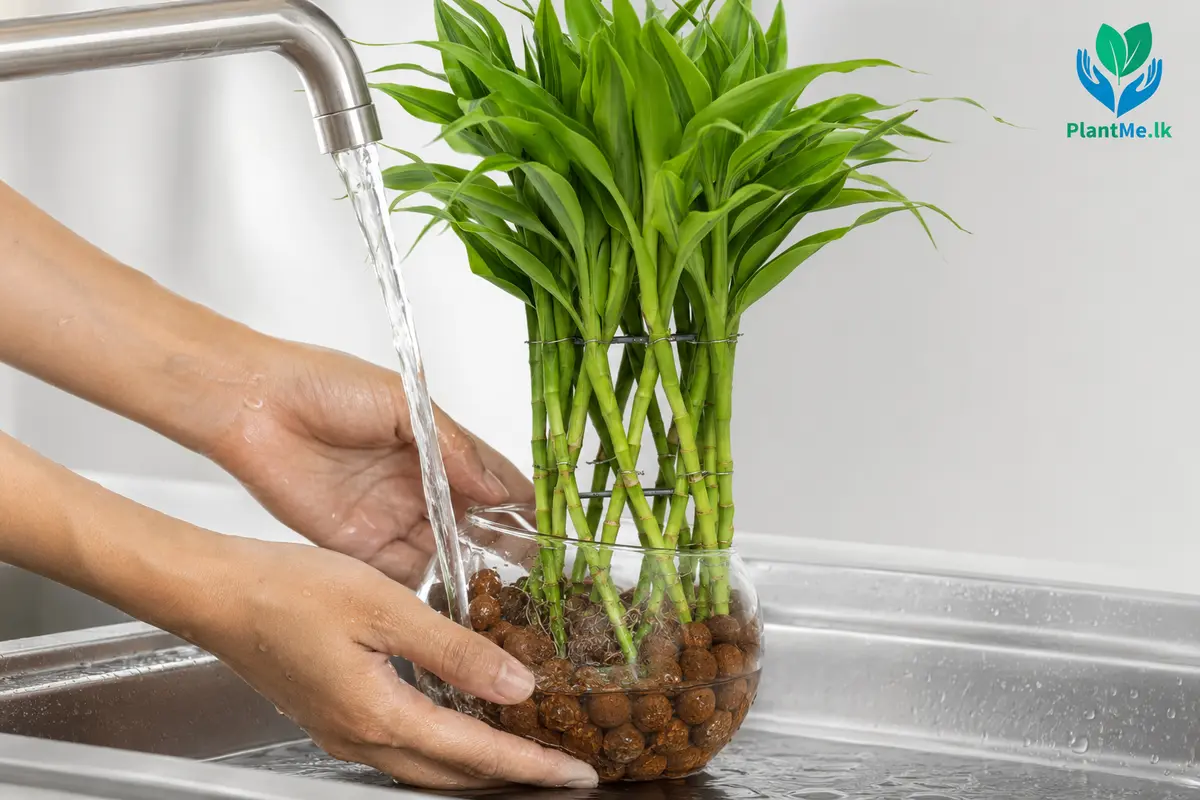
- Discard dirty water and rinse the container and loose LECA.
- Remove clearly dead root material with a clean tool.
- Refill with suitable clean water around the root zone.
Roots, medium and routine care
Fertiliser, temperature and recovery conditions
LECA contains no complete nutrient reserve, but that does not justify strong feeding. Excess fertiliser can damage roots and appear as tip burn or mineral deposits.
Cold AC discharge, sudden temperature changes and heat at a sunny window can compound water stress. Keep the recovering plant in a stable warm position with filtered light.
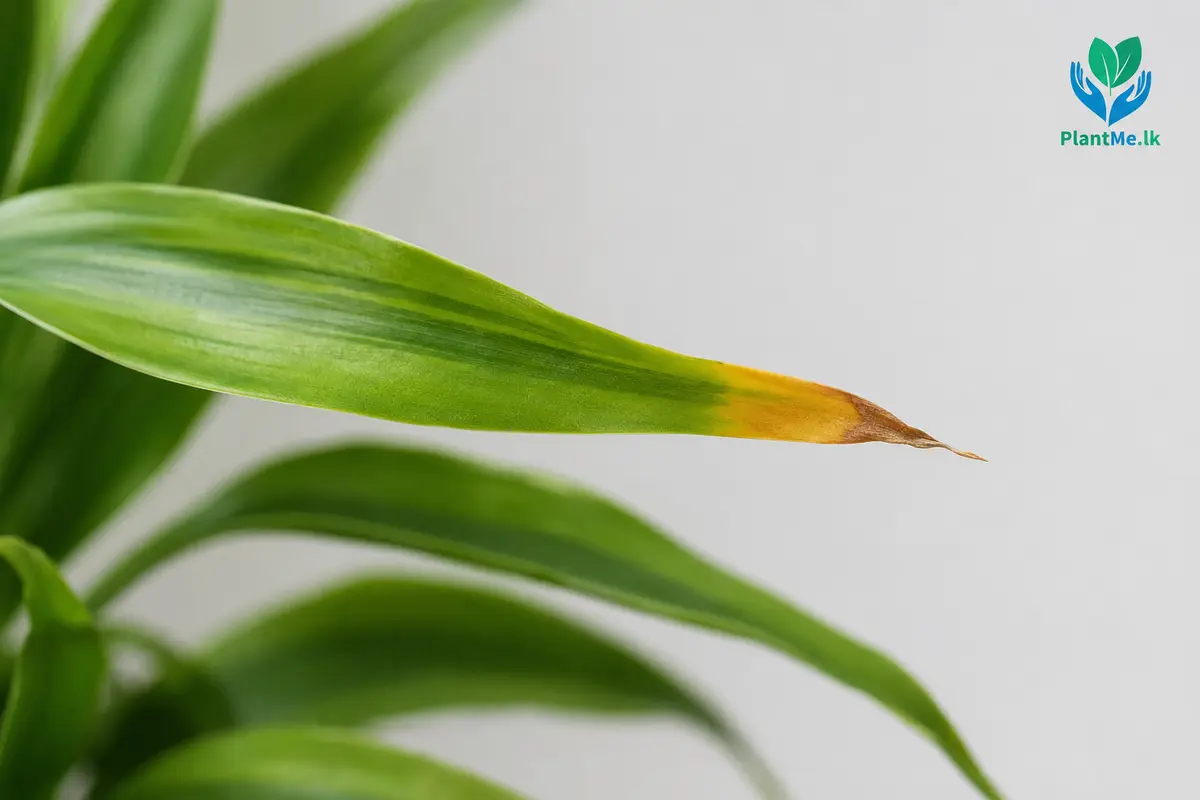
Leaf-tip damage
Correct the cause and trim only dead tissue if appearance matters.
Yellow leaf
Remove it when fully failed, but inspect whether other leaves are following.
Soft stem
Treat as urgent. Keep failing tissue away from healthy stems and seek rescue advice.
Healthy roots
Protect firm living roots and avoid repeatedly dismantling the arrangement.
Make one reasoned change at a time, except when soft rot requires urgent removal. A flurry of water, fertiliser, sun and repotting makes the real cause impossible to identify.
Diagnose before treating
Common yellowing Lucky Bamboo problems
This table separates the visible symptom, the test and the urgency of the response.
| Symptom | Likely causes | What to check | Practical action |
|---|---|---|---|
| Dry brown tip | Salts, dry airflow, water quality | Crust on glass; AC direction | Refresh water and correct exposure |
| One yellow lower leaf | Age or mild stress | Whether new leaves remain healthy | Monitor after correcting conditions |
| Several yellow leaves | Root, water, sun or feeding stress | Roots, reservoir and light history | Clean system and correct the confirmed cause |
| Yellow firm stem | Early stress or irreversible tissue change | Firmness along full stem | Separate and seek product-specific advice |
| Yellow soft stem | Rot or severe failure | Softness, smell and root condition | Urgent removal from healthy arrangement |
Do not keep a soft failing stem pressed against healthy woven stems. Fast separation can protect the rest of the arrangement.
Repotting and propagation
What can be saved?
A fully yellow soft stem is unlikely to recover, but a firm healthy top above a localised damaged area may sometimes be restarted.
- Identify tissue that is fully green and firm.
- Cut above the damaged section using a sterilised tool.
- Discard soft or foul-smelling tissue.
- Root the viable cutting in clean water or a suitable medium.
- Keep it in filtered light and monitor new root development.
If several stems are involved or the woven structure makes separation difficult, contact PlantMe with clear photos before dismantling the arrangement.
Apply the guide
A 10-minute diagnostic sequence
Do not wait days while making random changes. A structured first inspection usually reveals whether the problem is cosmetic, environmental or urgent.
Minute 1 to 3: identify
Photograph the whole plant, then the affected tip, leaf or stem. Note whether the damage is firm or soft and whether it faces the window.
Minute 4 to 7: inspect roots
Look through the glass for water clarity, reservoir depth, root colour and debris. Smell can reveal decay that colour alone misses.
Minute 8 to 10: check location
Find direct sun, hot glass and the AC airflow path. Make the smallest change supported by evidence, except when soft rot requires immediate separation.
Use these scenarios as a starting point, then confirm the exact PlantMe product, current listing and conditions before acting on Lucky Bamboo turning yellow.
Clear answers
Frequently asked questions
Can a yellow Lucky Bamboo leaf turn green again?
No. Yellow tissue does not regain chlorophyll. Correct the cause so healthy tissue and new growth remain green.
Should a yellow stem be removed?
A soft yellow stem should be separated urgently. A firm yellow section still needs assessment because the colour generally does not reverse.
Does boiled or filtered water help?
Filtered low-mineral water may help when the local source contributes to tip damage. Boiling does not remove every dissolved mineral.
Why are only the leaf tips brown?
Possible causes include mineral build-up, dry AC airflow, fertiliser salts or physical damage. Check the pattern and container.
When should the water and LECA be cleaned?
Clean when water clouds, debris accumulates, algae or mineral film interferes with inspection, or roots show decay. Inspect regularly.
Evidence base
Sources and further reading
This guide combines PlantMe product context with established horticultural guidance. Always adapt general advice to the exact specimen, pot, growing medium and room.
Prevent the problem from returning
Use the exact PlantMe container and root arrangement as your guide. For help, send clear photos rather than a one-line description of yellow leaves.
Product availability, plant size, pot combinations, delivery charges and care needs can change. Confirm the current listing and your room conditions before ordering.
